
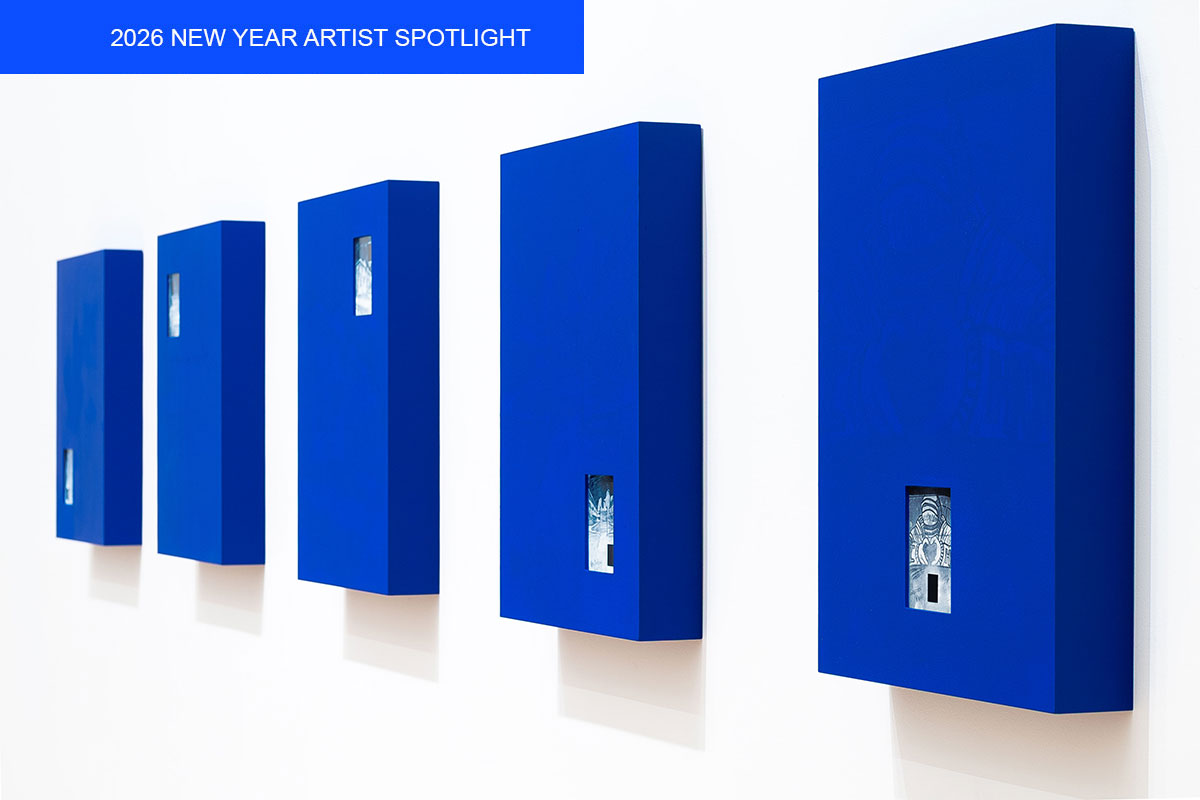
Born in Cuba in 1983, Reynier Leyva Novo uses art as a tool for inquiry rather than depiction. His practice explores how systems of power, memory, and belief quietly settle into everyday settings—and how those systems are upheld, questioned, or gradually dismantled. Working across sculpture, installation, sound, painting, and research-driven formats, Novo pays close attention to how history operates beneath the surface: how stories are formed, obscured, and carried forward without overt display. He often engages with symbols tied to authority and ideology, not to affirm them, but to probe what remains once their authority loses force. Novo avoids linear narration, favoring instead an approach built from remnants—dust, sound, altered environments, and neglected records. These elements open onto broader reflections on shared experience, particularly within Caribbean and diasporic realities shaped by movement, faith, and political constraint. His work values sustained attention over visual excess, revealing how collective and personal histories continue to inhabit spaces long after their visible traces fade. Long-term presence, close observation, and movement through place are central to his process.
Gut It, Forget It. Invisible Houston
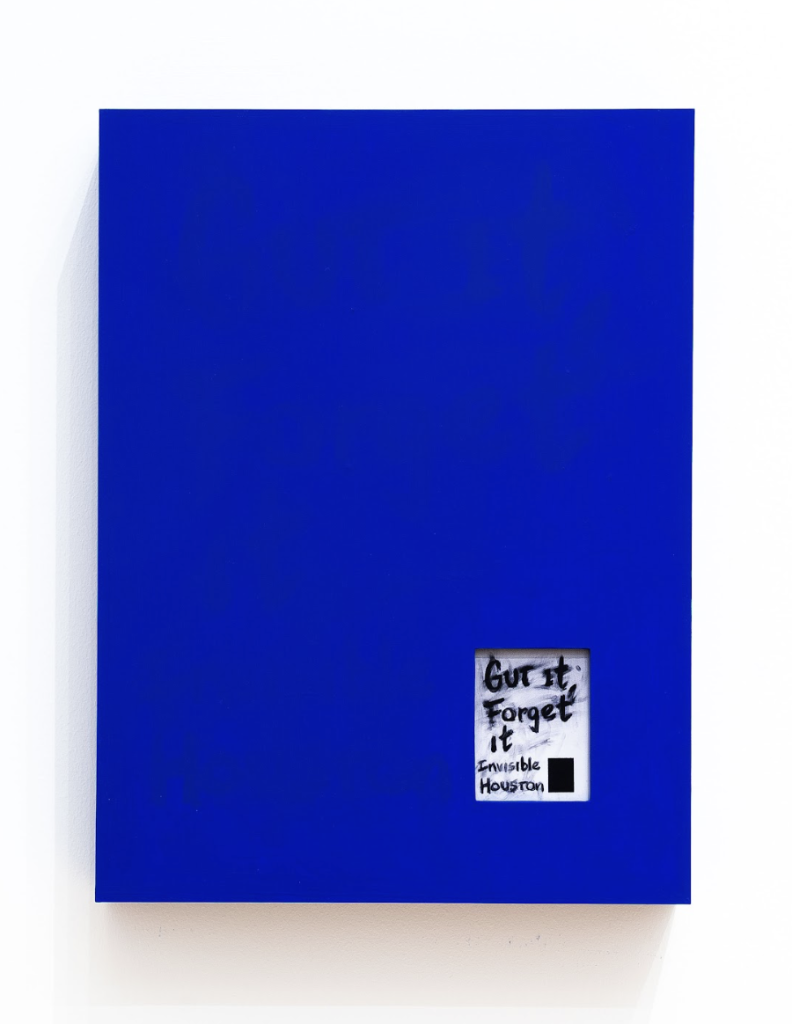
Gut It, Forget It. Invisible Houston unfolds as a layered exploration of place, disappearance, and persistence. Developed in collaboration with local partners, the exhibition is grounded in extended, street-level research across Houston’s wards and historic neighborhoods, with a particular focus on the Third Ward, where Novo lives and works. Rather than approaching the city from a conceptual distance, the project emerges through walking, listening, collecting, and paying attention to the rhythms of Houston’s ongoing transformation.
The exhibition brings together three interconnected bodies of work—False Calm, Invisible Houston, and Sacred Dust. Each employs a distinct material approach, yet all share an interest in what is overlooked, displaced, or quietly sustained. Together, they present the city not as a fixed territory, but as an active environment shaped by memory, absence, and continual change.
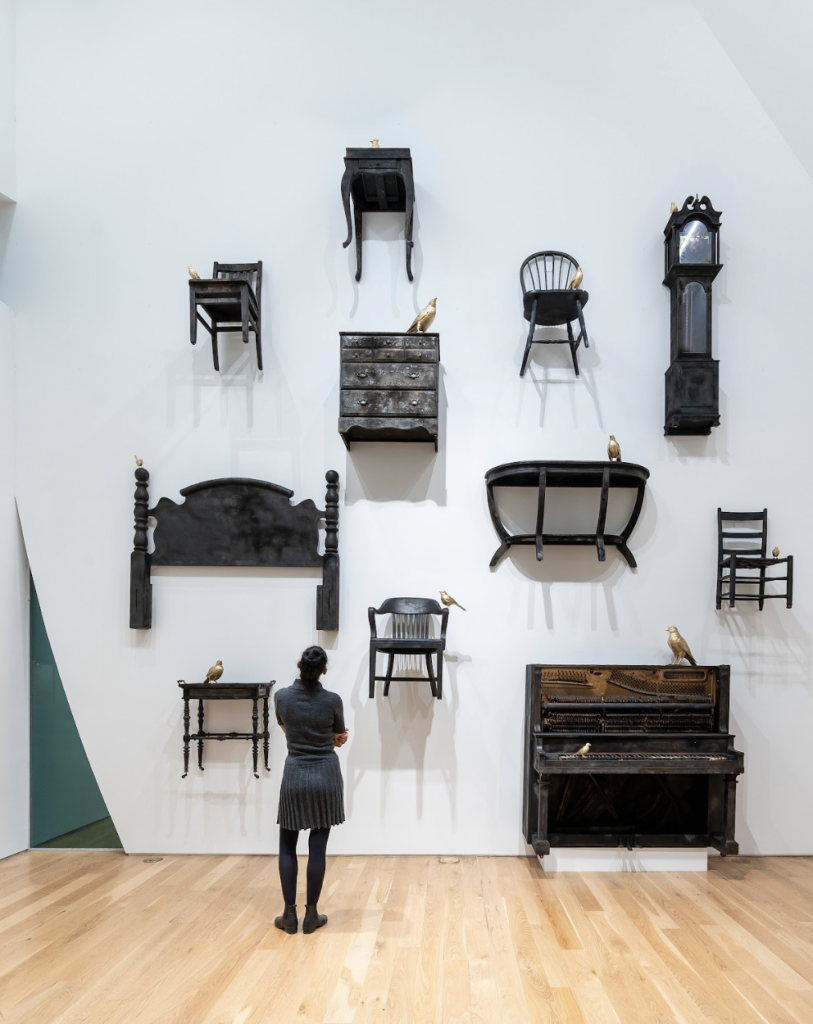
False Calm takes shape as a large-scale installation composed of burned household furniture distributed throughout the gallery. The charred objects suggest rupture and aftermath, but they are not treated as static remnants. Positioned among them are 3D replicas of Houston’s native birds, accompanied by recordings of their calls. Sound circulates through the space, moving between moments of calm and dissonance, and becomes a structural element in its own right. The work draws from Novo’s daily movement through the Third Ward, where demolition, reconstruction, and displacement unfold alongside ordinary routines. The furniture evokes domestic presence, while the birds signal survival—life continuing in altered conditions. Rather than dramatizing loss, the installation registers it quietly through material repetition, restraint, and sound.
Invisible Houston centers on a monumental painting measuring nine by thirteen feet. At first glance, its surface appears muted and nearly uniform, dominated by a deep blue tone. Beneath this surface lies a hidden register: a list of historic Houston buildings that have been gutted, erased, or transformed beyond recognition. These references remain invisible until revealed through infrared imaging devices available in the gallery, allowing a second visual layer to emerge in real time. This delayed visibility echoes the way urban histories often persist—present, yet unreadable without specific tools or attention.
Embedded within this concealed layer is the image of a cosmonaut, drawn from a mural that once appeared on the façade of a building in Houston’s former Graffiti Park before its demolition. Typically associated with futurity and progress, the figure here becomes a marker of disappearance. Once openly visible, it now exists as a faint trace, accessible only through technological mediation. In this context, progress is reimagined not as forward motion, but as a process that often depends on erasure.
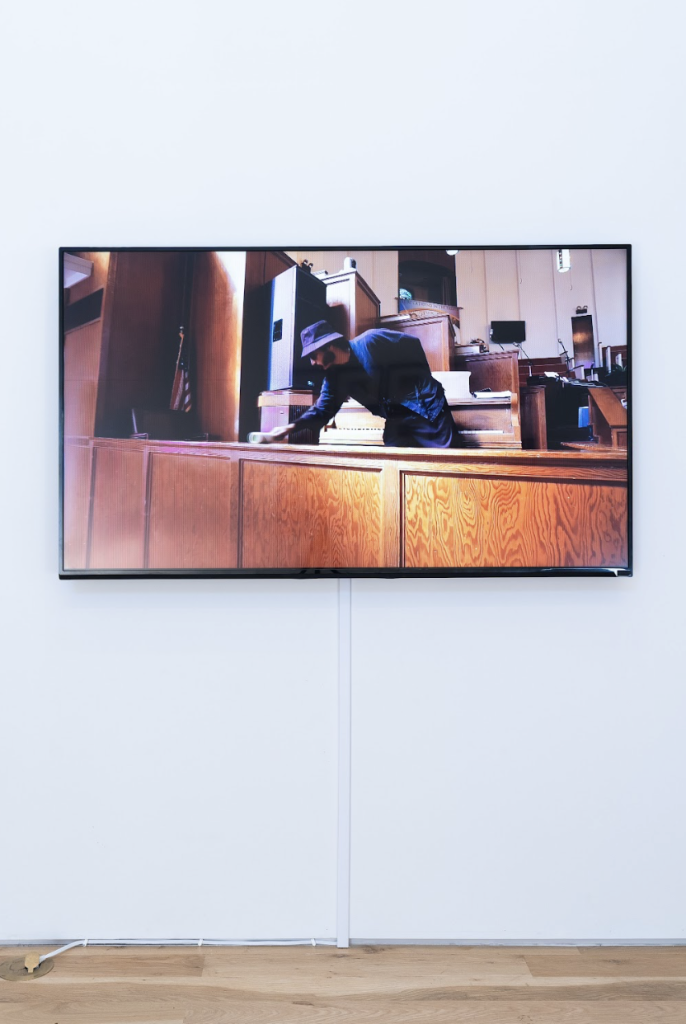
Sacred Dust extends Novo’s ongoing Global Active Dust Collection Center into Houston’s dense and diverse religious landscape. Evangelical churches, synagogues, mosques, and Buddhist, Taoist, Hindu, and Islamic temples become sites of material gathering. Novo collected dust from these locations, treating it as a physical record shaped by time, ritual, and collective presence. Presented alongside documentary videos that follow the act of collection, the material remains grounded in lived exchange rather than abstraction. Here, dust functions as evidence—a quiet accumulation of bodies, gestures, and belief systems coexisting within a single city.
Beyond the gallery space, Novo initiated Open Archive: Third Ward, a year-long public call inviting residents and community organizations to contribute personal materials tied to neighborhood life. Photographs, documents, audio recordings, and ephemera are incorporated not as supporting material, but as a central element of the project. The archive grows through participation rather than hierarchy, reflecting Novo’s ongoing concern with how histories are shaped—and who is given the authority to shape them.
The phrase Gut It, Forget It captures the exhibition’s central tension. To gut a building is to strip it of function and memory; to forget is to accept that erasure as normal. Novo’s work interrupts this cycle. Without turning to restoration or nostalgia, Invisible Houston asks for sustained attention—inviting viewers to notice what continues to exist beneath surfaces and to reflect on how cities remember, even when they appear not to.
