
For Allan Wesaquate, painting is an exploration of feeling rather than an attempt to capture a single, fixed moment. His abstract compositions are driven by movement, rhythm, and emotion, inviting viewers into spaces where color and texture continually shift across the surface. Working primarily with acrylics and expressive mark-making, he builds layered paintings that suggest energy in constant motion instead of static form. Each work begins with personal experience but avoids offering one definitive interpretation, allowing individual responses to shape its meaning. Bold palettes, fluid gestures, and richly textured surfaces give his paintings an unmistakable sense of vitality. Rather than directing the viewer toward a specific conclusion, Wesaquate encourages curiosity and emotional engagement, creating artworks that evolve with every viewing. His practice reflects a belief that abstraction can communicate through atmosphere as much as imagery, making each painting a conversation between artist, material, and audience.
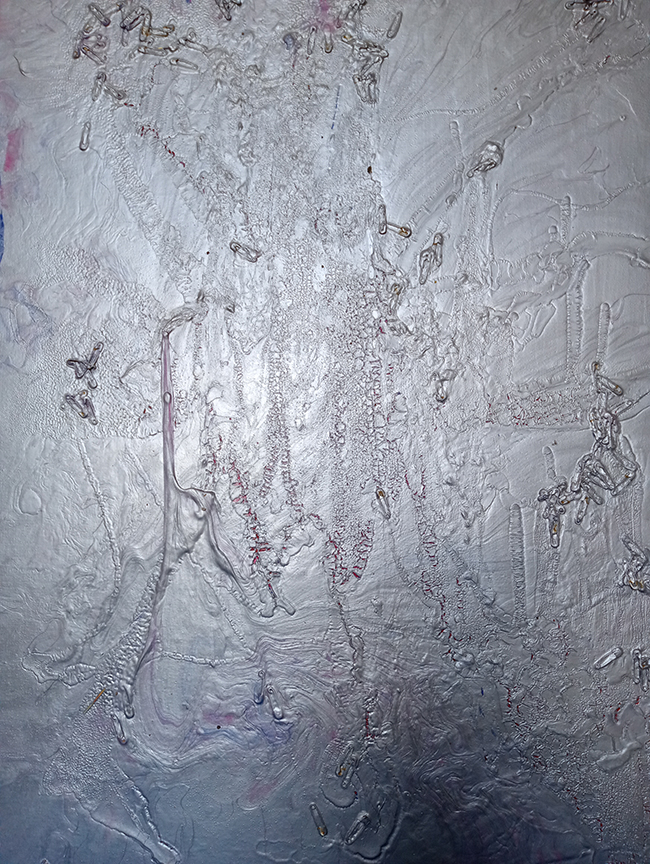
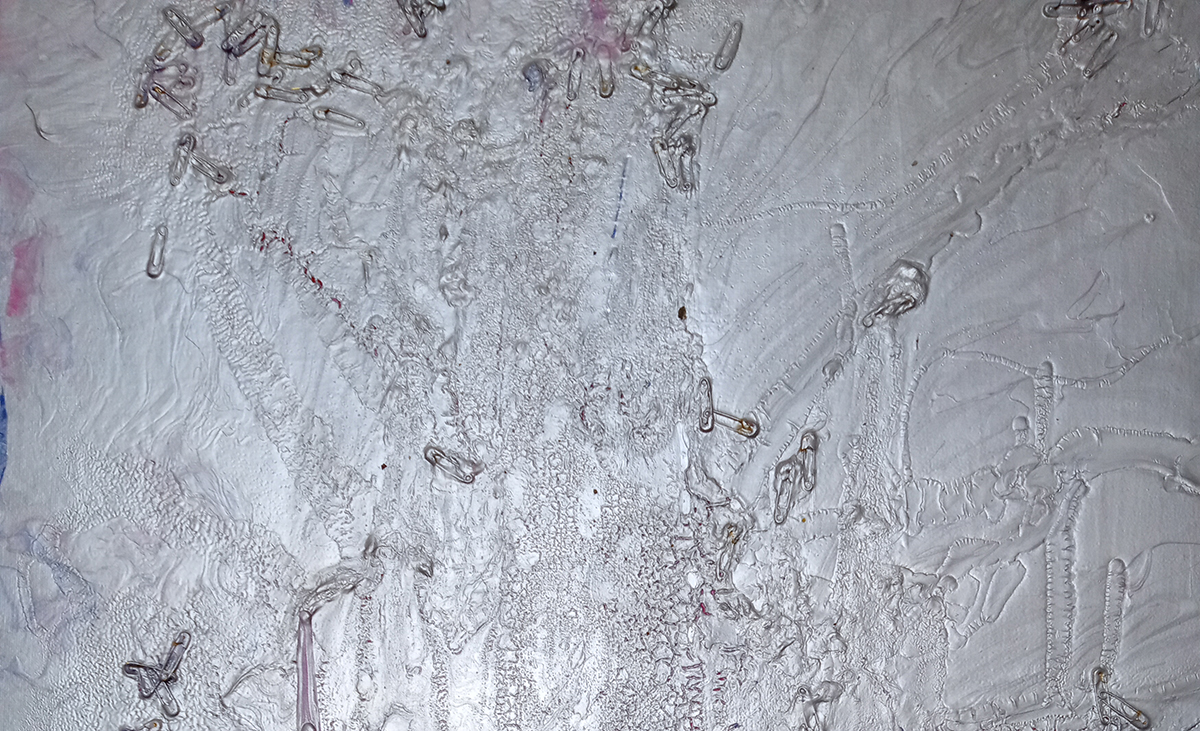
One of Allan Wesaquate’s recent works reaches beyond traditional painting by embracing assemblage as both a visual and conceptual language. Measuring 20 by 30 inches, the artwork combines acrylic paint, spray paint, glue, and an unexpected material—safety pins—to create a surface that is textured, layered, and unapologetically raw. Instead of aiming for polish or perfection, the piece embraces rough edges and visible imperfections, using them as an essential part of its identity. The result is a work that carries the spirit of rebellion while remaining deeply personal.
At the heart of the painting is Wesaquate’s connection to the early punk movement that shaped his teenage years. Rather than simply referencing a musical genre, the artwork reflects the attitude that surrounded punk culture. It recalls a period when creativity thrived without expensive materials or commercial expectations. Bands often performed in small venues, produced music independently, and challenged accepted norms. That independent spirit becomes the foundation of the painting, giving it an authenticity rooted in lived experience rather than nostalgia.
The inclusion of safety pins immediately establishes this connection. During the rise of punk, ordinary objects became symbols of identity and resistance. Safety pins were worn on ripped clothing, jackets, and accessories not because they were decorative, but because they represented resourcefulness and a rejection of conventional fashion. By incorporating them directly into the artwork, Wesaquate transforms an everyday object into a lasting visual statement. They become more than materials—they carry memories of a particular cultural moment and the values that accompanied it.
Spray paint contributes another important layer to the composition. Historically associated with street art, public expression, and spontaneous acts of creativity, it introduces an immediacy that contrasts with more carefully controlled painting techniques. Combined with acrylic paint, the sprayed passages create energetic transitions between color, texture, and gesture. Some areas appear dense and tactile, while others remain open and atmospheric, encouraging the eye to move continuously across the surface.
The artist openly describes the work as “a bit ugly and messy,” a description that reveals much about his creative philosophy. Rather than avoiding disorder, he welcomes it. The uneven textures, rough construction, and imperfect surfaces reject conventional ideas of beauty. Instead, the artwork finds its strength in honesty. Every scratch, layer, and exposed edge contributes to a visual language that values authenticity over refinement. This willingness to embrace imperfection reflects the same outlook that defined much of punk culture itself.
The painting also serves as a tribute to bands that influenced Wesaquate during his youth, including the Sex Pistols, The Clash, the Buzzcocks, and countless lesser-known groups that rarely received mainstream attention. These musicians represented an alternative path outside commercial success, proving that creative expression could flourish without widespread recognition. Their influence is felt throughout the work, not through literal portraits or references, but through its attitude, energy, and refusal to conform.
While the piece draws from a specific cultural movement, its themes remain relevant today. Questions about individuality, belonging, resistance, and identity continue to resonate across generations. Wesaquate uses memories from his own life as a starting point, yet the emotions embedded within the work extend far beyond autobiography. Anyone who has felt like an outsider or questioned accepted norms may recognize something familiar within its layered surface.
Ultimately, this assemblage painting demonstrates how personal history can become contemporary visual expression. Through safety pins, spray paint, acrylics, and deliberately rough construction, Allan Wesaquate transforms memories of youth into an artwork that speaks about independence, resilience, and self-definition. It is both a reflection on where he came from and a reminder that creativity often grows strongest outside established boundaries, where individuality is valued more than conformity and expression matters more than perfection.
