
Pam Fields is a Las Vegas-based erotic art photographer recognized for her expressive use of light and shadow. Working with women, men, and couples from around the world, she creates intimate portraits that explore sensuality, confidence, vulnerability, and human connection. Her carefully guided sessions allow clients to express parts of themselves that may ordinarily remain private or unseen. Within an atmosphere free from shame or judgment, the camera becomes a means of personal discovery rather than simple documentation. Some of the resulting photographs have appeared in exhibitions and galleries, moving beyond private portraiture into the realm of contemporary art. Fields is also a speaker and educator who teaches photographers to approach intimate imagery with sensitivity, professionalism, and respect. Central to her practice is a belief that every body carries its own history and deserves to be represented honestly, without being corrected, diminished, or hidden.
Fields’ photography examines the meaningful space between concealment and revelation. Her subjects may appear physically exposed, yet the images are never concerned with exposure for its own sake. Instead, nudity becomes a visual language through which people can acknowledge desire, reclaim confidence, and encounter their bodies without apology. Each portrait records a decision to become visible on one’s own terms.
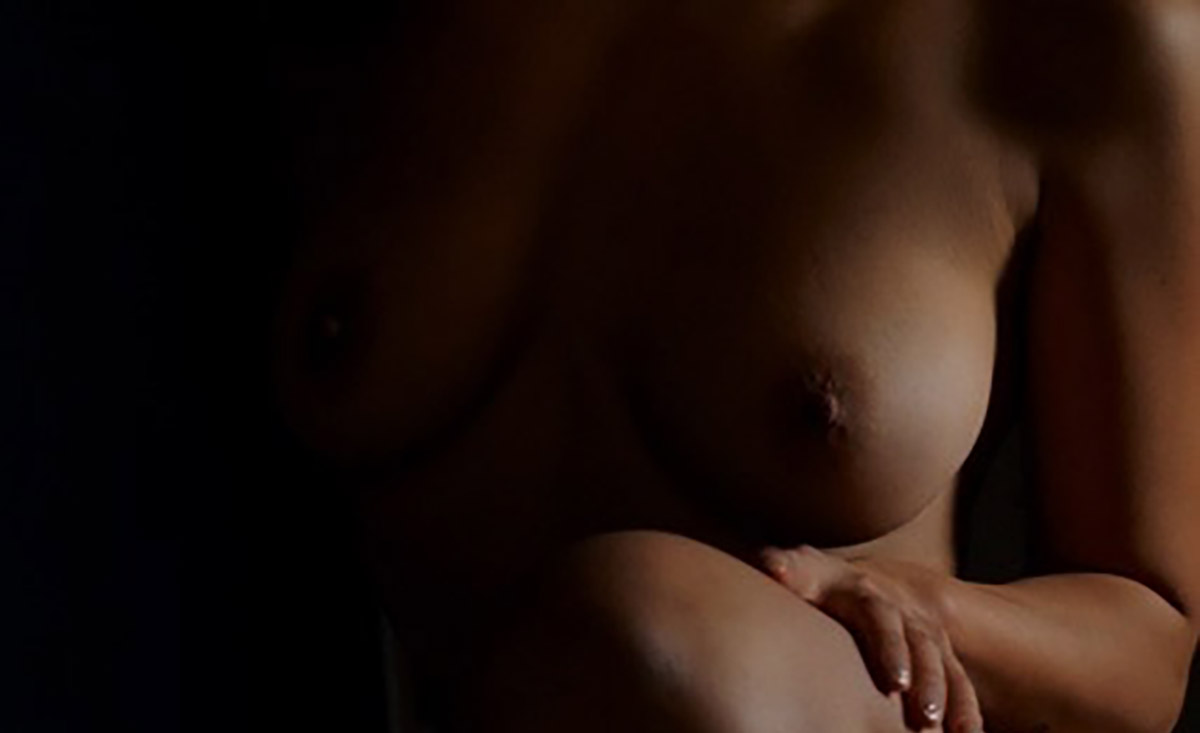
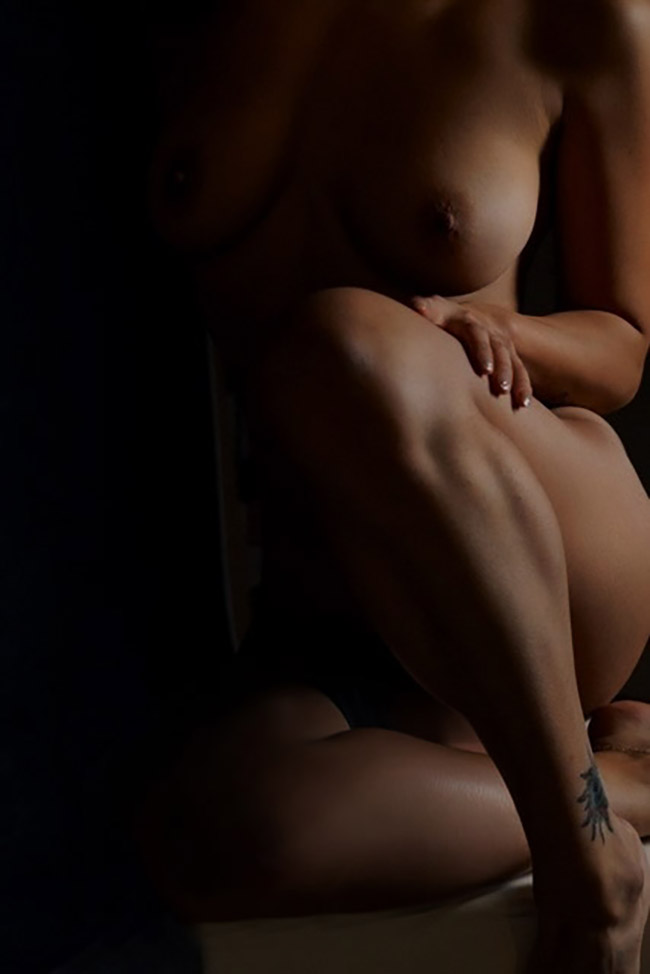
In In the Shadows, the body emerges gradually from a surrounding field of darkness. A narrow passage of warm light defines the subject’s chest, hand, leg, and foot, while much of the figure remains obscured. This limited visibility encourages a slower way of looking. The viewer must follow the light across the body and notice its subtle transitions, from illuminated skin to deep, nearly impenetrable black.

The composition feels private and inward-looking. The subject’s bent leg creates a protective structure across the body, while the gently resting hand introduces calmness and self-possession. A small tattoo near the ankle provides an individual detail within an otherwise anonymous portrait. Because the face is hidden, identity is communicated through posture, touch, and physical presence. Fields presents sensuality as something quiet and self-contained, capable of existing without performance or explanation.
Her photograph In His Hands approaches intimacy through the relationship between two people. Their tattooed bodies meet within a tightly framed composition that makes every gesture feel immediate. One hand gathers the woman’s hair while another supports her neck. Their faces nearly touch, capturing the suspended instant before a kiss. The image is charged with desire, but it also communicates attentiveness and mutual trust.
The tattoos are especially significant. Butterflies, flowers, words, symbols, and figurative designs cover the subjects’ skin, transforming their bodies into personal archives. These markings introduce narratives that remain partly unknowable to the viewer. Fields does not attempt to interpret them. Instead, she allows them to become part of the photograph’s visual richness, creating a dialogue between individual identity and shared intimacy. The couple appears neither idealized nor anonymous. They are recognizably themselves, with histories written directly across their bodies.
The color and lighting deepen the scene’s emotional warmth. Soft illumination reveals the texture of skin, hair, fabric, and ink without making the moment feel clinical. Darker areas around the figures create a sense of enclosure, as though the world beyond them has temporarily disappeared. Desire is presented not as spectacle, but as communication expressed through proximity and touch.
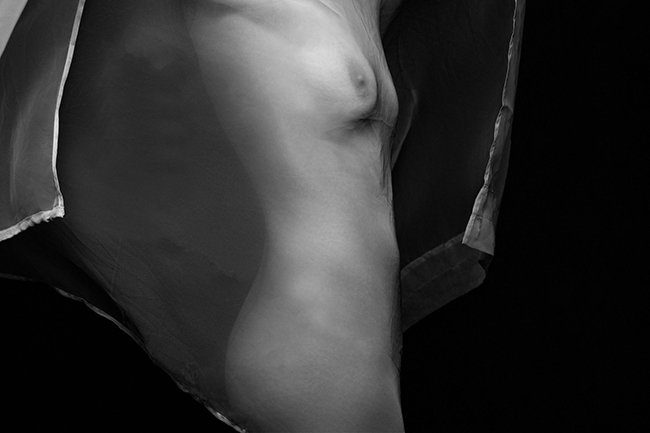
The Hidden Line, rendered in black and white, offers a more abstract study of the human form. The curved side of a torso appears between pieces of translucent material, producing an image that feels sculptural and mysterious. Removed from a wider narrative, the body becomes a landscape of light, contour, and tone. The incomplete view challenges the expectation that a portrait must clearly disclose its subject. What remains unseen is as important as what Fields permits the viewer to observe.
Across these photographs, her control of light establishes both atmosphere and emotional boundaries. Shadow protects the subject while illumination acknowledges their presence. This balance reflects the trust required in intimate portraiture. Fields understands that standing before a camera in a vulnerable state is not merely a physical act. It can involve uncertainty, nervousness, and the hope of discovering a more generous way of seeing oneself.
Her role therefore extends beyond arranging a pose or releasing the shutter. She creates the conditions in which self-conscious performance can gradually fall away. When that happens, an honest gesture, expression, or connection can emerge. Fields watches for this transition and captures it with restraint.
As an artist, speaker, and educator, Fields also advocates for an emotionally intelligent approach to erotic photography. Technical ability alone is insufficient for work involving such vulnerability. The photographer must be present, communicative, respectful, and conscious of the trust being offered.
Ultimately, Fields’ images are about permission: permission to desire, to feel powerful, to explore tenderness, and to occupy space without shame. Her photographs celebrate the body, but their deeper subject is the human need to be witnessed and accepted. Each image preserves a moment in which someone chose to stop hiding and allowed themselves to be seen more fully.
