
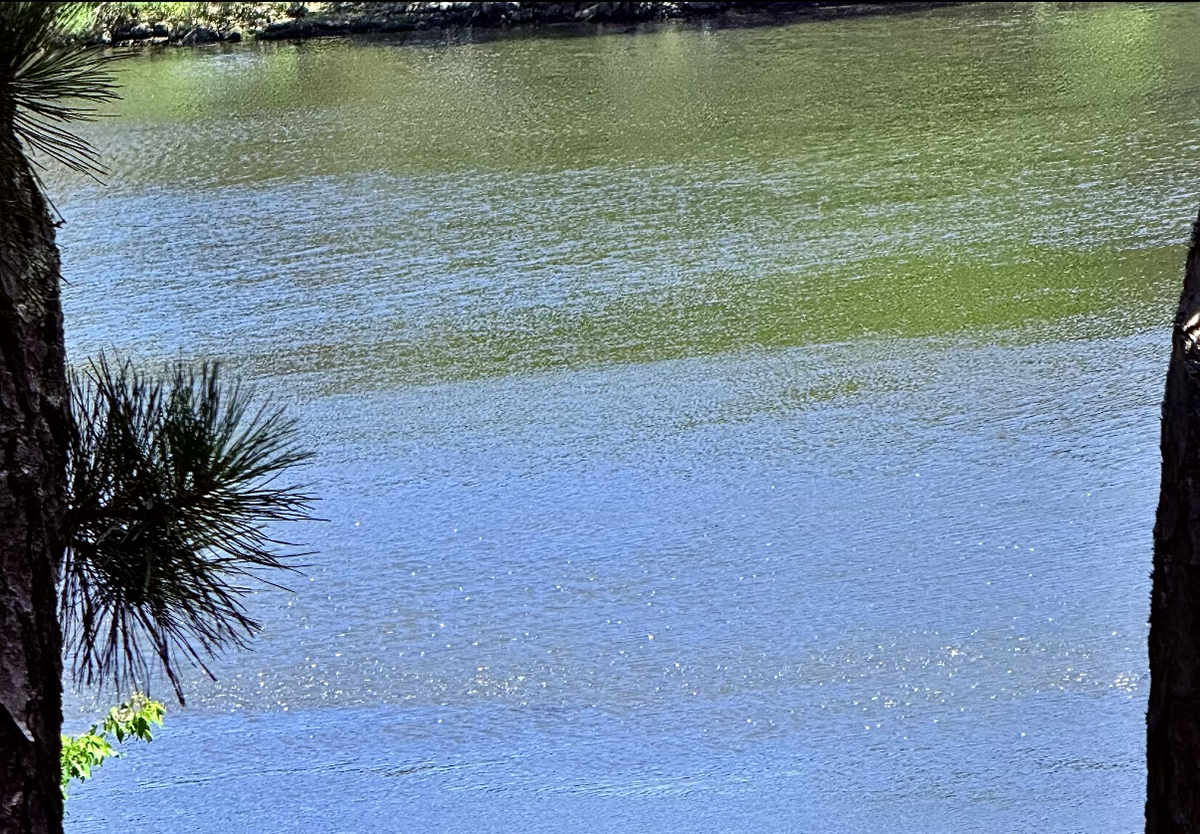
Based in New England on the East Coast of the United States, Karla Wave creates art shaped by close observation and subtle transformation. Her practice begins with an attentiveness to light, color, and the recurring rhythms of the natural world. Landscapes, flowers, trees, water, and digital processes enter her work as interconnected forms rather than separate subjects or techniques. One image may begin with a recognizable place before shifting toward abstraction, while another may use technology to intensify qualities already present in nature. Wave allows these visual languages to overlap, dissolve, and emerge in altered forms. This fluid approach reflects her interest in perception and the way surroundings change through movement, memory, and time. Her work does not attempt to preserve nature as something fixed. Instead, it considers how a place is continually remade by changing light, personal experience, and the viewer’s awareness of a moment that cannot remain.
Pitch Pine Trees
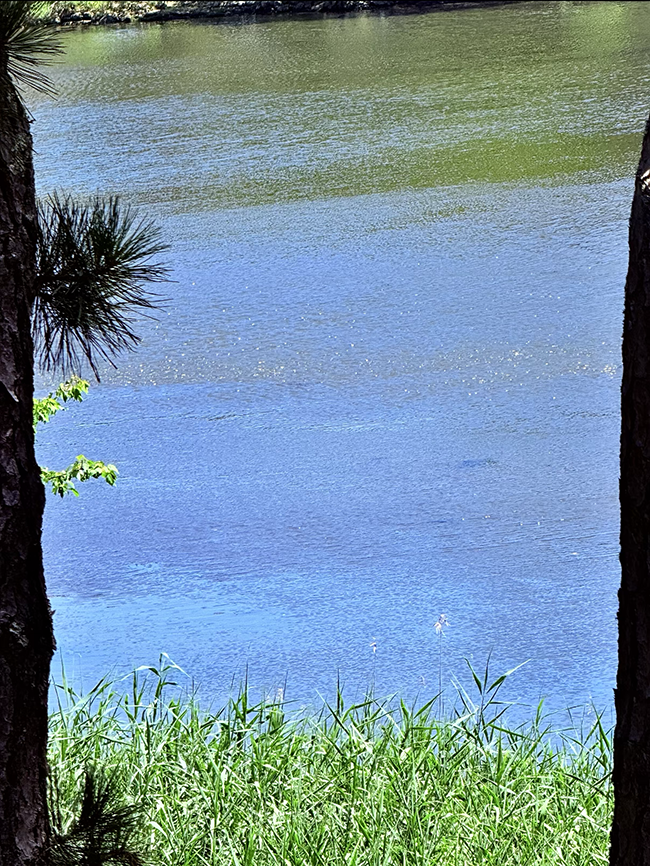
In Pitch Pine Trees, Wave turns her attention to the distinctive environment of Cape Cod, Massachusetts. The image is framed by two dark tree trunks positioned along its outer edges. Between them, a broad expanse of blue water opens toward the center, bordered at the bottom by sunlit grasses and small plants. This natural framing creates the feeling of looking through a passageway. The viewer does not stand at the center of an uninterrupted panorama but encounters the water from a partially sheltered position, as if pausing between trees before moving closer to the shore.
The composition feels simple at first, yet its arrangement creates a strong contrast between enclosure and openness. The trunks are solid, dark, and vertical, while the surface of the water is luminous and horizontal. Their rough visual weight holds the image in place as the blue expanse seems to move beyond them. In the foreground, irregular grasses introduce another type of energy. Their varied heights and bright green tones suggest growth, wind, and seasonal change. Together, these elements establish a quiet conversation between stability and movement.
Wave’s accompanying words deepen this sense of transition. She describes “a relocation unplanned,” followed by the recognition that she has somehow planned it throughout her life. The apparent contradiction captures the emotional complexity of change. A major transition may arrive unexpectedly while also feeling like the conclusion of a path followed for years. Her references to circling and tunneling suggest a journey that has not been direct. Progress occurs through repetition, searching, and the gradual discovery of access points.
Seen through this language, the two trees may be understood as more than compositional borders. They resemble the sides of an opening, marking a point of arrival while preserving awareness of what has been crossed. The water beyond them becomes a space of possibility. It is visible and inviting, but it cannot be completely possessed. Its surface shifts with light, wind, and tide, preventing the scene from becoming still despite the apparent calmness of the image.
Impermanence is central to the work. Wave mentions it twice, first as something finally reached and then as something encountered again through the tides. This repetition suggests that impermanence is not a single lesson or destination. It must be continually recognized. The tide changes the shoreline, revealing “another untouched sandbar” where there had previously been water. What appears stable is temporarily rearranged, and what was hidden becomes accessible for a limited time. The landscape therefore offers a visible structure for understanding personal change.
Color arrives near the conclusion of Wave’s text, followed by light. This sequence gives both elements emotional importance. The blue water occupies most of the composition, shifting subtly from cooler to greener tones across its surface. Bright vegetation forms a narrow band below it, while small touches of vivid green appear beside the darker trees. These colors do not overwhelm the scene. They emerge gradually, like awareness returning after a long internal passage.
The light of Cape Cod has often been valued for its clarity, but Wave approaches it as a lived encounter rather than simply a scenic feature. Light reveals the surface of the water, separates the grasses from the shore, and illuminates new growth beside the trunks. It also confirms that every visible quality is temporary. A change in weather or time of day would produce another image entirely.
Pitch Pine Trees ultimately presents relocation as both geographical and inward. Cape Cod becomes a place where uncertainty, memory, and renewal can coexist. Through an understated view of water framed by trees, Wave transforms a local landscape into a meditation on arrival. The work suggests that finding a place does not end movement. It creates another threshold, another changing shoreline, and another opportunity to meet impermanence through color and light.
