
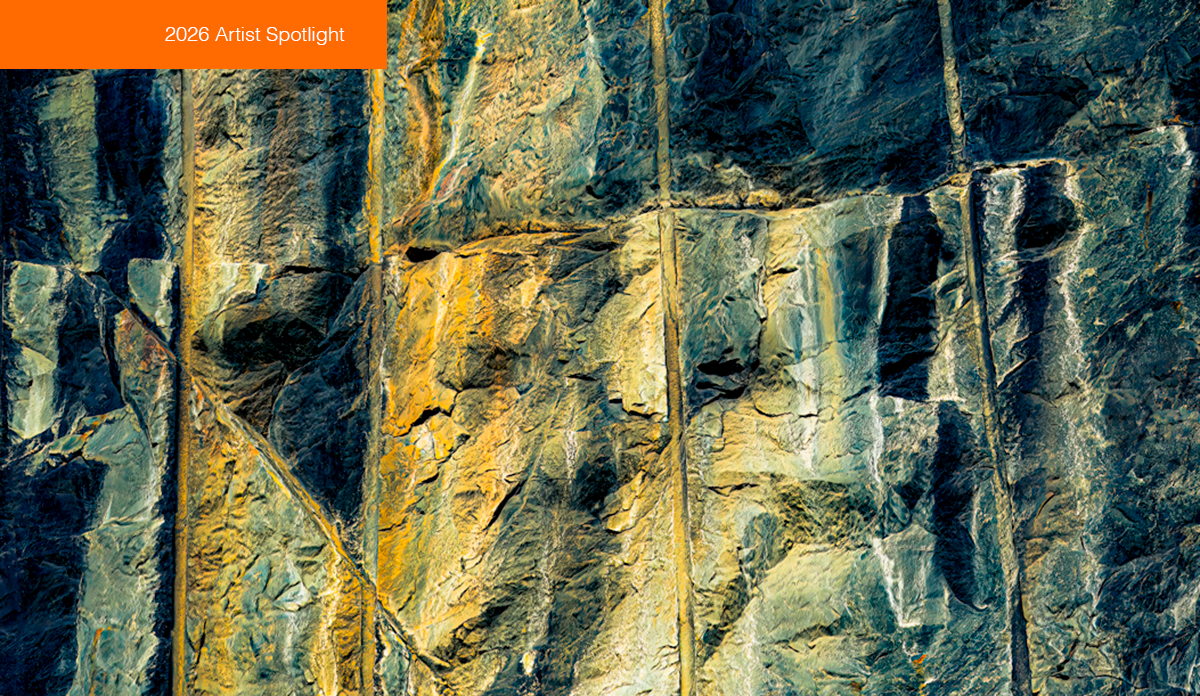
Julian Jollon is an American artist whose creative life has unfolded through interruption, redirection, and return. He received formal training in Fine Arts, Photography, and Painting, expecting to build a career grounded in studio work. Instead, his path shifted into a very different field. For many years, he worked in Hospital Epidemiology, a profession focused on research, systems, and the protection of human health. During that period, he also experienced a liver transplant—an event that reshaped his awareness of time, physical vulnerability, and what it means to move forward with borrowed time.
When art reentered his life, it did so with purpose. His practice today is informed as much by lived experience as by formal education. Themes of fragility, endurance, and mortality exist quietly within his images. He is less interested in spectacle and more drawn to what remains—stone, memory, myth, and the human search for meaning within the natural world.
Myth, Stone, and Memory
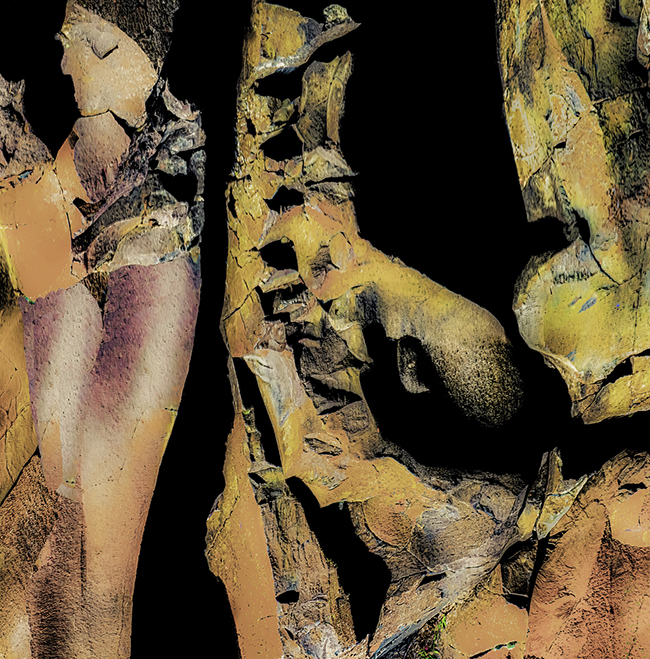
Jollon’s photographic work Mythical Geology reflects on the idea that landscapes can carry narrative. At first glance, the piece appears to be an abstract study of mineral and rock surfaces. Rich earth colors—burnt sienna, ochre, and deep browns—bring to mind clay, sediment, and weathered cliffs. The textures feel immediate and tactile, encouraging close looking along fractures and grain.
With time, the image begins to shift. Viewers may notice shapes forming within the stone: the curve of a snake, the suggestion of a feminine silhouette, a face that feels almost extraterrestrial. These presences do not seem inserted; they appear discovered, the way figures emerge from shadow or cloud when one looks long enough.
The serpent carries meanings recognized across many traditions, often associated with renewal, healing, and cycles. In Jollon’s image, the snake does not signal danger. It rests within the terrain, visually bound to the same patterns as the rock. This creates a sense that life and geology are intertwined, not separate domains.
The hint of a woman’s figure introduces a different resonance. She appears to surface from the stone itself, as though shaped by the same natural forces. This can be read as a nod to Earth as a generative presence, or as a reminder that perception and nature collaborate in forming meaning. The contrast between soft bodily curves and rugged surfaces invites reflection on vulnerability alongside strength.
An unfamiliar, alien-like face pushes the image beyond a purely human timeframe. It suggests awareness that exists outside ordinary chronology. The notion of watchers—beings beyond linear time—recasts the landscape as a place of witnessing and record. Stone, in this sense, holds impressions and traces.
Light and composition guide how these elements are seen. Shadows create spaces that feel like openings, while light outlines forms that seem to emerge. The photograph carries a feeling of gradual revelation. Time is sensed as depth and duration rather than clock time. The land appears still yet quietly alive.
The poetic language connected to Mythical Geology reinforces this mood. It speaks of listening rather than touching, and of stories resting in mineral silence. This reflects Jollon’s broader sensibility. His photography often invites pause. He does not fix meaning in place; he leaves room for personal interpretation.
Odysseus and the Stone Watchers
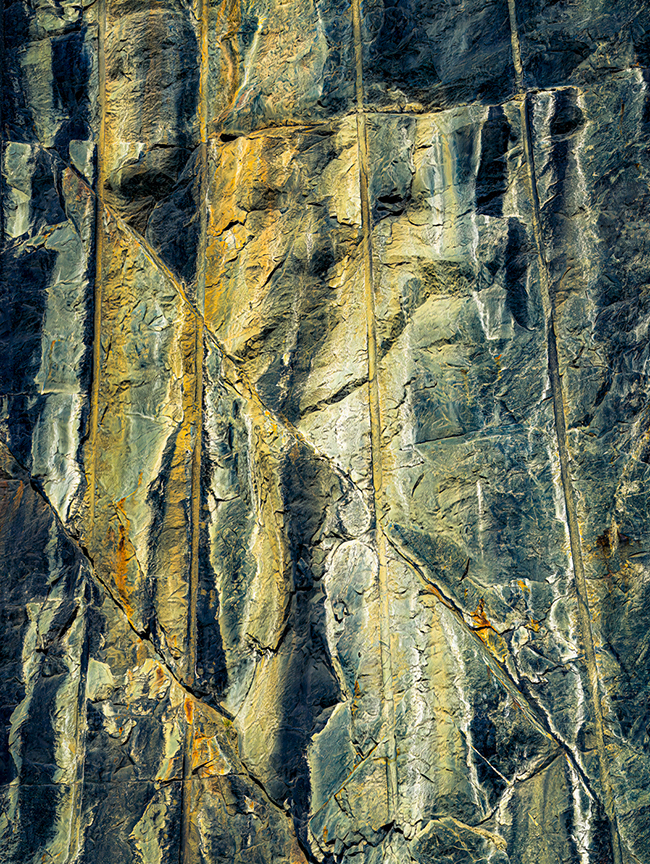
In Odysseus Confronts the Rocky Cliff, Jollon shifts toward narrative. Drawing from mythic structure, he situates the journey within geological space. Odysseus becomes not a traveler of oceans but a seeker drawn toward the memory held in stone. The voyage moves inward, through cliffs and canyon walls.
At the center of the story is a “spirit lens,” a device that reveals what stone remembers. The idea parallels photography itself. A camera can do more than record surfaces; it can uncover layers of meaning. Through this lens, ancestors appear, grief takes visible form, and avoided truths appear as masks.
Each carved head—T’kama, Eshuna, and Moroq—embodies a different human state. Curiosity, sorrow, humor, and self-recognition surface through these encounters. Eshuna’s tears turning into luminous marks suggest grief as communication rather than weight. Moroq’s playful trickster energy turns evasion into confrontation with truth.
These moments feel like inner landscapes projected onto physical terrain. The cliffs operate as emotional spaces as much as geological ones. When the final forming face resembles the seeker, the realization follows: the task was never to find the Watchers, but to become one. Memory lives not only in places, but in those who witness and carry it.
A Practice Guided by Attention
Throughout his work, Jollon returns to awareness—of time, connection, and human limits. His scientific background and medical experiences likely deepened his sensitivity to interdependence and survival. Even when his images lean toward myth and symbolism, they remain grounded in physical elements: rock, surface, and light.
Patience is central to his approach. The photographs do not demand immediate reaction. They reward slow looking and a willingness to sit with uncertainty. Meaning can shift depending on perspective and moment.
Jollon’s return to art reads less as a restart and more as a continuation informed by life beyond the studio. His images suggest that stone carries traces of time, and people do as well. By weaving together geology and imagination, he creates work that is contemplative, open, and attentive to the subtle dialogue between Earth and human perception.
