
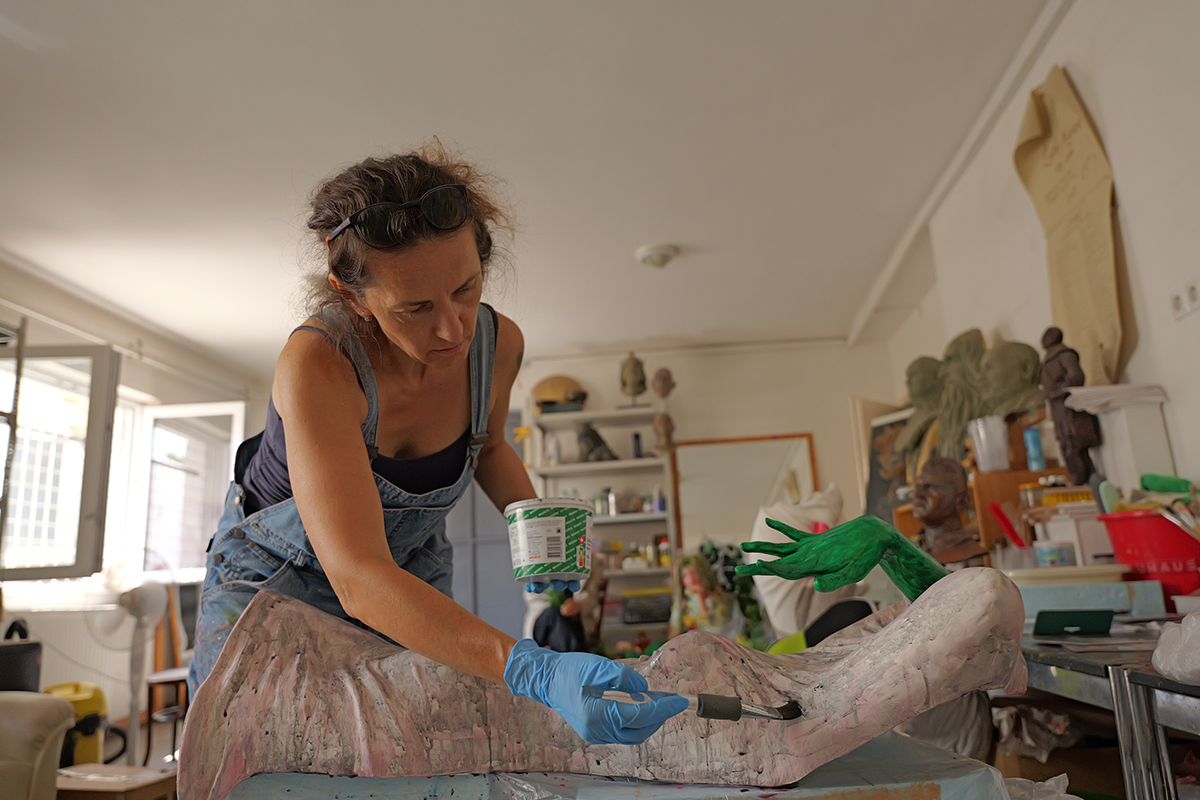
Judit Nagy L. was born in Slovakia, a place shaped by layered histories and cultural depth. From a very young age, she approached the world as something to be explored visually. Even in kindergarten, observation turned into interpretation, as if everything around her already carried the potential to become art. This early instinct guided her toward formal training, first in a public art school and later in private studios, where she developed her visual language. Life, however, did not follow a straight path. She pursued a Master’s degree in civil engineering, built a family, and entered the world of business. Yet something remained unresolved. The absence of art created a quiet tension that never fully disappeared. Returning to creative practice was not a casual decision but a necessary one. It became a way to reconnect with something essential that had been set aside but never lost.
The Work
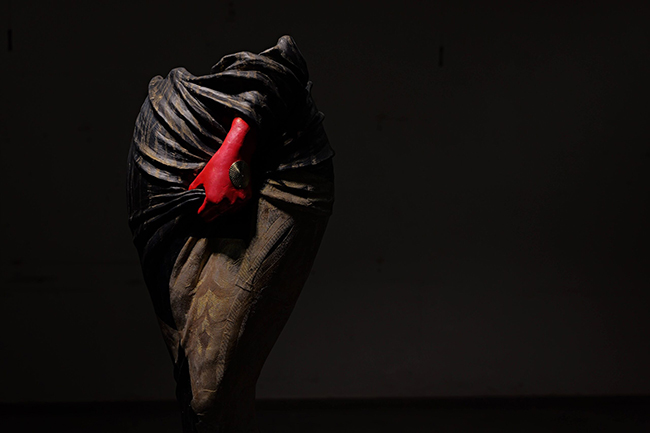
“Corpus Hermeticum (Another Way)” unfolds as more than a body of work. It operates as a system, a constructed space where perception itself is tested and reshaped. Positioned as a prelude within a broader philosophical art book, it introduces a trilogy of paintings titled “PRIDE,” accompanied by a corresponding set of sculptures under “WOMEN PRIDE.” Together, these elements do not function independently. They are designed to be experienced as a unified structure, where each part reinforces and extends the others.
At its core, the work moves through a sequence of internal recognition. The process begins with the discovery of inner light, continues through the confrontation with shadow, and arrives at a moment of self-recognition. This progression is not presented as narrative. It is not explained or illustrated in a literal sense. Instead, it is embedded in the spatial and visual logic of the work itself. The viewer does not follow a story. They encounter a condition.
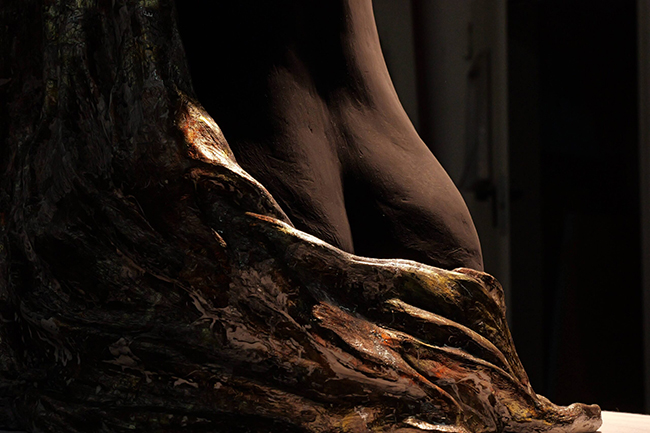
In this framework, the body is redefined. It is no longer treated as physical substance but as a vessel. What appears on the surface is intentionally incomplete, suggesting that what matters most cannot be directly seen. This idea is carried through both the paintings and the sculptures. Forms are often fragmented, resisting easy resolution. Unity exists, but it is withheld. The viewer is required to engage more closely, to move beyond immediate perception in order to grasp what is implied rather than stated.
The space surrounding the work is equally important. It is not neutral or open. It feels contained, deliberate, and at times restricted. There is a sense that access is controlled, that not everything is immediately available. This creates a subtle tension. The viewer becomes aware that entry into the work is not automatic. It must be negotiated. This controlled environment shifts the role of the observer. Instead of remaining outside, the viewer becomes part of the structure.
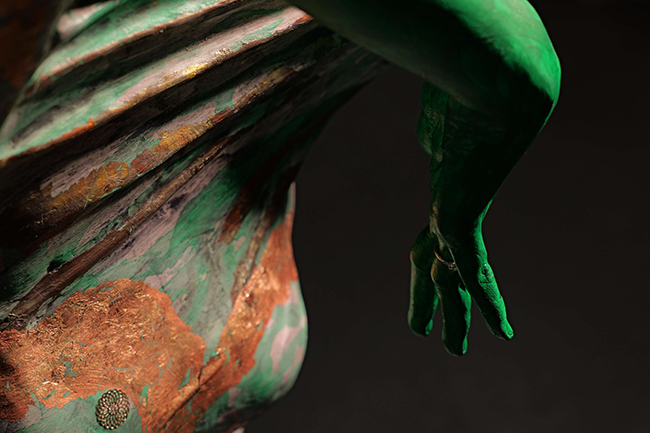
The gaze plays a central role in this exchange. It is not one-directional. The figures within the work appear to return the gaze, creating a loop of attention. Looking becomes an active process, not a passive one. There is a sense of being seen in return, which alters the usual distance between artwork and viewer. This interaction reinforces the idea that the work is not something to be consumed from afar. It demands presence.
Light is used with similar intent. It does not function as simple illumination. Instead, it acts as a means of revelation. What is revealed, however, is not always clear or complete. Light exposes fragments, hints, and transitions rather than fixed forms. This approach aligns with the overall structure of the work, where clarity is never total and meaning remains in flux.
Absence is another defining element. It is not treated as emptiness but as structure. What is missing becomes just as important as what is present. Silence operates in a similar way. It is not a lack of information but a different form of communication. These choices shift the focus away from objects and toward experience. The work does not aim to present finished images. It creates conditions in which perception can shift.
The trilogy format reinforces this approach. By dividing the work into three interconnected stages, Judit Nagy L. establishes a rhythm that mirrors the internal process she is exploring. Each stage carries its own weight, yet none stands alone. The sculptures extend the presence of the paintings into physical space, grounding the conceptual framework in tangible form while maintaining the same sense of incompleteness and tension.
What emerges is not a collection of separate artworks but a self-contained environment. It functions as a threshold. Entering it requires attention and openness. Remaining within it requires a willingness to engage without immediate resolution. The viewer is not positioned as an observer but as a participant, implicated in the act of perception itself.
In this way, “Corpus Hermeticum (Another Way)” resists easy categorization. It does not seek to explain or describe. It constructs a space where something can be encountered, even if it cannot be fully defined. The experience is not about arriving at a conclusion. It is about undergoing a shift.
