
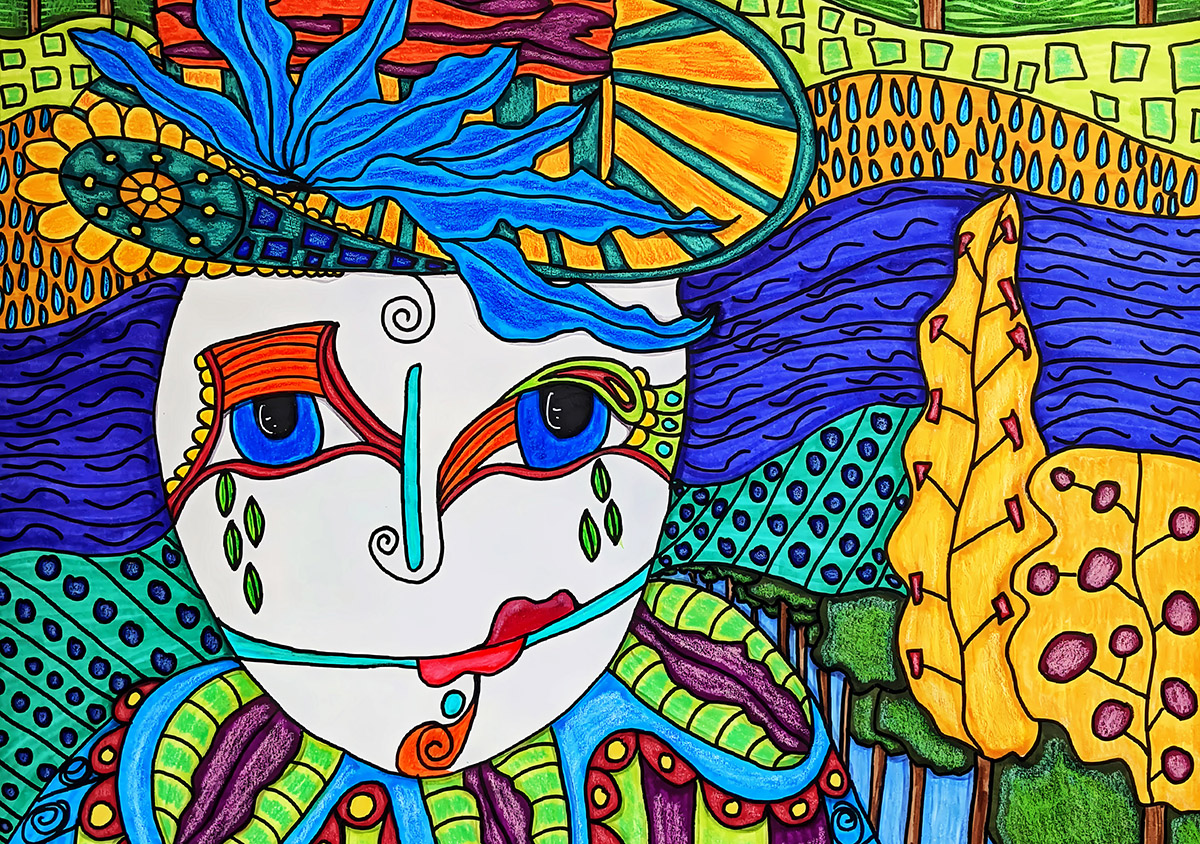
In the wide and ever-changing landscape of contemporary art, some artists create images, while others construct entire emotional environments through their work. Kimberly McGuiness belongs firmly in the second group. Her paintings do not simply present scenes; they invite viewers into reflective spaces where color, symbol, and atmosphere work together to form quiet narratives. There is a sense of stillness within her compositions, yet that stillness carries an undercurrent of movement, as if each element is part of a living story unfolding just beneath the surface.
McGuiness approaches painting as a form of visual meditation. Rather than explaining ideas directly, she allows forms, patterns, and color relationships to guide the viewer into a deeper experience. Her work often balances calm with intensity, simplicity with layered meaning. Through this approach, her paintings suggest that reflection and imagination are closely connected.
Her artistic language relies less on overt storytelling and more on suggestion. Figures appear as symbolic presences, landscapes transform into psychological spaces, and color becomes a carrier of mood. In many ways, McGuiness creates visual environments where contemplation becomes possible. Her paintings encourage viewers to slow down, observe carefully, and allow meaning to emerge gradually.
Through this quiet but thoughtful approach, McGuiness demonstrates how art can function as both expression and reflection. Her work suggests that beauty does not always need to announce itself loudly. Sometimes it exists in subtle shifts of color, in gentle symbolism, or in the quiet presence of a figure standing watch over an imagined world.
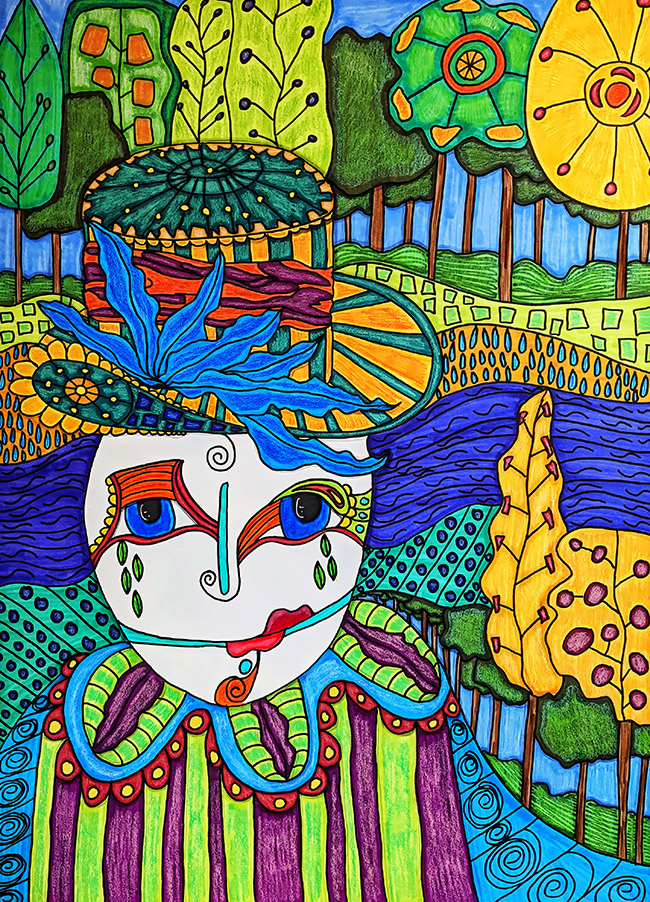
One of McGuiness’s works, The Grounds Keeper, explores the idea of stewardship through a rich interplay of color and symbolism. The painting presents a central figure who appears deeply connected to the landscape that surrounds them. Trees, water, and sunlight form a patterned environment where each element seems carefully balanced, almost like parts of a living ecosystem that moves in quiet harmony.
The figure stands not as an outsider observing nature, but as an integrated part of it. Decorative details within the figure echo the shapes and rhythms of the surrounding forest, suggesting that the boundary between caretaker and environment has dissolved. This connection transforms the keeper into both guardian and participant in the natural world.
Color plays an important role in shaping the mood of the piece. Vibrant tones bring life and energy to the landscape, while patterned elements guide the eye through the composition. Instead of creating a static scene, the painting suggests movement and interaction, as though the environment itself is breathing.
The title, The Grounds Keeper, adds another layer of meaning. Traditionally, a groundskeeper maintains and protects a physical space. McGuiness expands that idea into something more symbolic. The figure becomes a representation of responsibility, reminding viewers that care and attention are necessary to sustain both nature and the environments we create around ourselves.
In this sense, the painting speaks to a broader message about stewardship. It suggests that every person plays some role in maintaining balance, whether in nature, relationships, or personal aspirations. The keeper becomes a symbol of the quiet commitment required to nurture something over time.
The work invites viewers to reflect on what they themselves are responsible for protecting or cultivating. A garden, a creative practice, a shared space, or even an idea can require the same patience and attention that a groundskeeper gives to the land. McGuiness subtly proposes that care itself is a form of creative action.
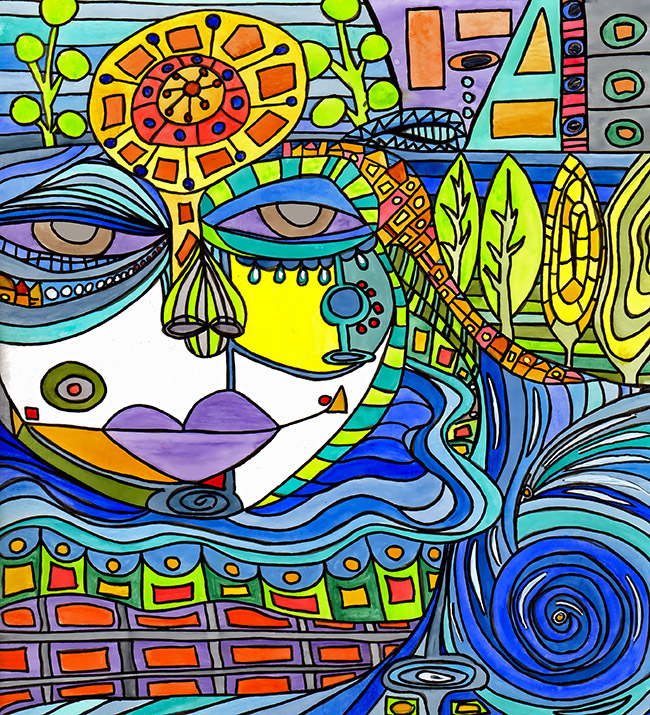
Another work by McGuiness, The Guardian, explores a more introspective theme. The figure in this painting stands at the meeting point of water and sky, a place where physical landscape merges with inner reflection. The setting feels both expansive and calm, suggesting a moment of pause within a much larger flow.
Water moves through the composition as a metaphor for thought and memory. It suggests a continuous movement beneath the surface of awareness, carrying experiences and emotions in quiet currents. The figure appears attentive to these unseen movements, as though listening to the rhythm beneath the visible world.
In this work, the idea of guardianship shifts from protecting land to protecting perception. The figure becomes a keeper of awareness, someone who watches over the inner landscape of thought and feeling. This role emphasizes patience rather than authority.
The painting does not present dramatic action. Instead, it focuses on stillness and observation. The guardian’s presence suggests that understanding often arrives slowly, through attention and reflection rather than sudden revelation.
McGuiness uses this quiet setting to raise a gentle question for viewers. Are we willing to pause long enough to notice what is already present within us? Beneath daily distractions and constant noise, there may be a steady rhythm guiding perception and understanding.
The story within The Guardian unfolds softly. It does not demand attention. Instead, it offers a space where contemplation can occur. Through the figure’s watchful stance, McGuiness suggests that clarity often emerges when we allow ourselves to truly see.
Together, The Grounds Keeper and The Guardian reveal a consistent thread in McGuiness’s practice. Her paintings explore care, awareness, and the quiet responsibilities that shape both the outer world and inner experience. Through symbolism, color, and atmosphere, she creates spaces where reflection becomes part of the visual experience itself.
