
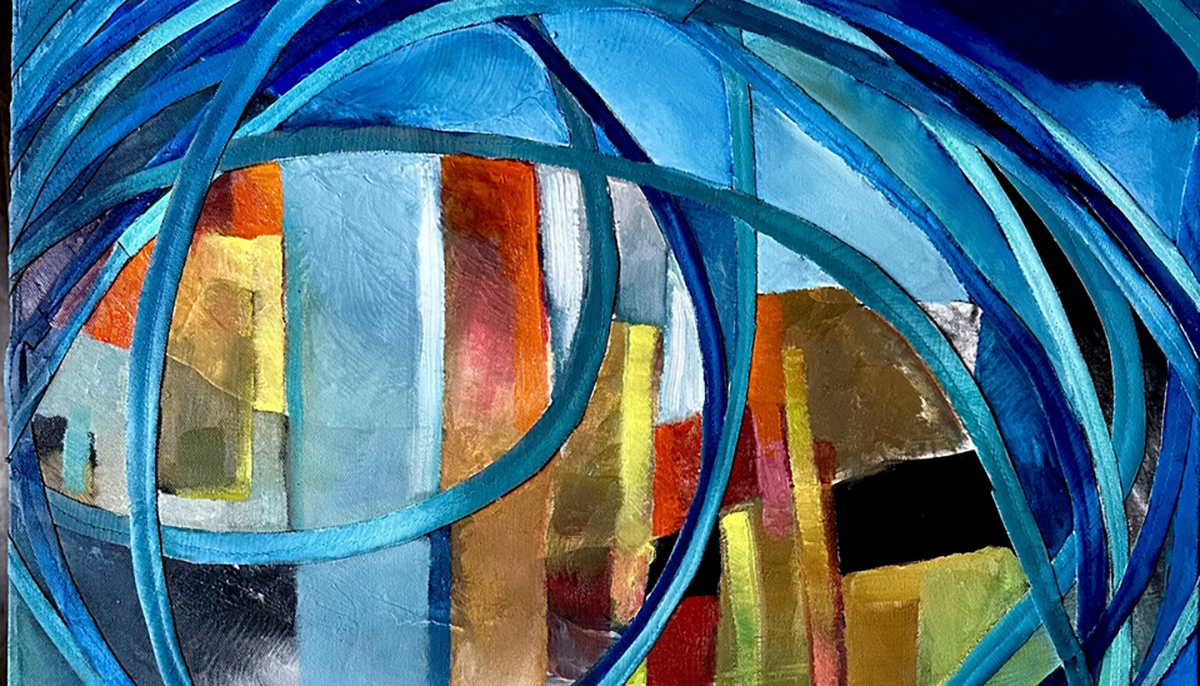
Born in Lisbon in 1962, Miguel Barros is an artist whose work has been shaped by movement across countries, cultures, and emotional landscapes. His life has unfolded between Portugal, Canada, and Angola, experiences that continue to influence the way he approaches painting and memory. In 2014, Barros relocated from Angola to Calgary, Canada, a transition that introduced distance between himself and the city that remains emotionally central to his work: Lisbon. Rather than weakening this connection, separation appears to have intensified it. Lisbon has become more than a location in his paintings; it exists as a psychological and emotional space reconstructed through longing, recollection, and imagination.
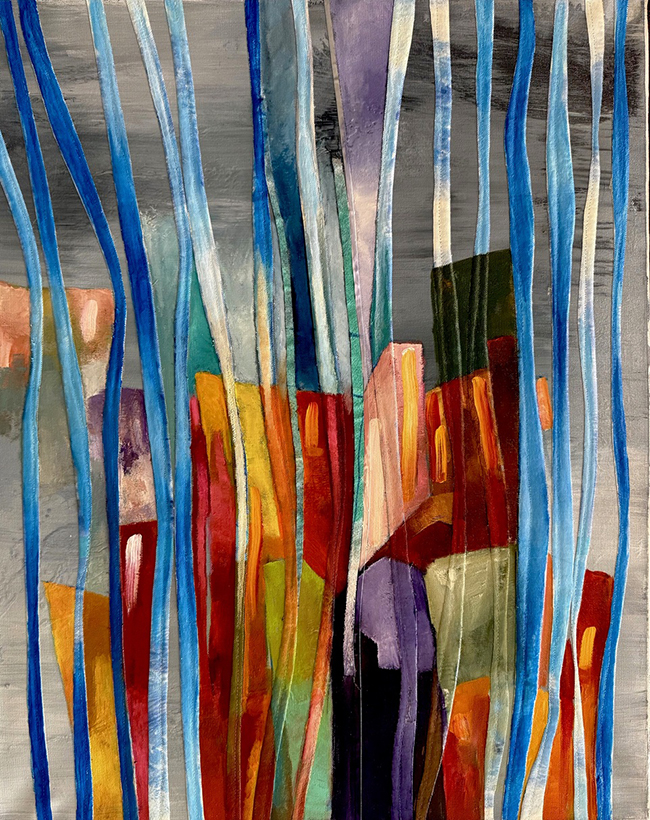
Educated in Architecture and Design at IADE in Lisbon, Barros brings a strong sense of structure into his compositions. Yet his paintings never feel confined by precision alone. Geometry, perspective, and spatial balance serve as quiet foundations beneath surfaces filled with atmosphere, emotion, and shifting light. His work moves fluidly between observation and intuition, where memory becomes physical and architecture becomes deeply human. Streets, stairways, façades, and reflections transform into emotional landscapes shaped as much by feeling as by place itself.
For Barros, painting is not simply an act of representation. It becomes a way of remaining connected to origins while living far from them. Through color, texture, and composition, he reconstructs fragments of Lisbon into spaces that exist somewhere between reality and remembrance. His paintings carry the emotional weight of migration while also offering moments of peace, reflection, and continuity.
A City Reimagined Through Distance
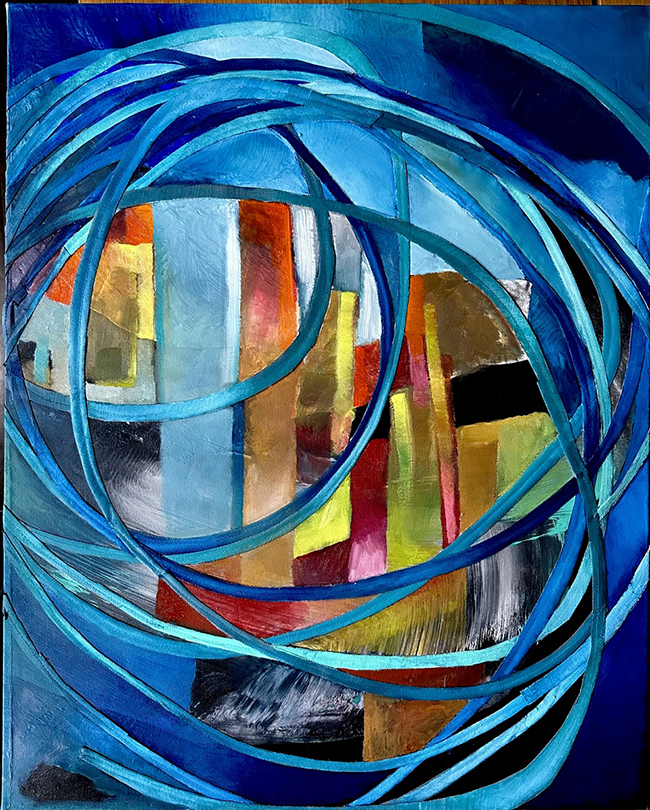
The paintings Wandering around Largo do Chiado in Lisbon and Lisbon Cathedral after the Rain, both oil on canvas works measuring 61 x 77 cm, reveal Barros’ deeply personal relationship with Lisbon. These are not documentary depictions of the city. Instead, they function as emotional translations of memory, where architecture and atmosphere merge with longing and imagination.
Barros describes Lisbon as living through his paintings, becoming “the living record of an emigrant who misses home.” This emotional foundation shapes the entire body of work. The city appears suspended between memory and dream, familiar yet transformed through distance. He paints not only what he remembers visually, but what he continues to feel internally. In this way, Lisbon becomes an emotional geography rather than a fixed location.
The influence of Portuguese azulejos, the traditional painted ceramic tiles found throughout Lisbon, plays an important role in his visual language. Their geometric rhythm, reflective surfaces, and luminous blue tones appear echoed throughout his compositions. Barros connects this blue directly to the Tagus River through the poetic idea of “Azul’Tejo,” where water, sky, tile, and memory merge into a singular visual atmosphere. Blue in his paintings becomes more than color. It functions as emotion, history, and identity. It carries the presence of the Atlantic, the calm of reflection, and the melancholy tied to displacement.
In Wandering around Largo do Chiado in Lisbon, the city unfolds like a sequence of layered impressions. Streets extend across the composition almost like brushstrokes themselves, guiding the viewer through shifting planes of light and geometry. The painting captures movement without urgency. There is a contemplative quality in the way the urban space opens gradually, inviting viewers to drift through it rather than simply observe it. Architectural forms remain recognizable, yet softened through memory and atmosphere.
Similarly, Lisbon Cathedral after the Rain transforms the familiar image of the cathedral into something intimate and emotionally charged. Rain introduces reflection and luminosity, allowing surfaces to shimmer with softened light. The city appears momentarily suspended between stillness and renewal. Wet streets mirror fragments of sky and architecture, creating layered spaces where reality and reflection overlap. The cathedral itself becomes less a monument and more a quiet emotional anchor within the composition.
Throughout Barros’ work, Lisbon continually shifts between the physical and the imagined. Stairways climb toward distant light. Narrow alleys carry echoes of unseen voices and forgotten moments. Arches frame views that feel timeless and suspended beyond ordinary experience. Every wall, corner, and doorway participates in what feels like an ongoing act of reconstruction, as though the city is being rebuilt emotionally through paint.
Despite the personal nature of these works, Barros’ paintings extend beyond autobiography. They touch on broader themes of migration, belonging, memory, and emotional continuity. Distance becomes both painful and productive, allowing recollection to transform reality into something poetic and enduring. His paintings suggest that places do not disappear when left behind; they continue evolving internally through memory and feeling.
In Barros’ vision, Lisbon becomes an open-air canvas where history, architecture, light, and emotion flow together continuously. Words dissolve into color, color becomes atmosphere, and atmosphere becomes identity. His paintings do not simply portray a city. They rebuild a relationship with it. Through each composition, Lisbon remains luminous, reflective, and alive within his imagination.
