
Maridee Hays is a California artist whose work brings together influences from literature, dance, psychology, Eastern philosophy, journaling, and studio practice into a deeply layered artistic approach. Instead of treating these interests as separate disciplines, Hays allows them to flow into one another, shaping a visual language guided by intuition, reflection, and spiritual curiosity. Her work crosses between painting, mixed media, and sculptural forms, creating pieces that feel both contemplative and emotionally immediate. Rooted in an ongoing interest in perception and inner awareness, Hays views art as a process of exploration and discovery. Themes of memory, transformation, consciousness, and emotional experience often emerge throughout her practice. Over time, her artworks have developed into increasingly textured and multidimensional forms, where symbolism, material, and gesture connect the internal world with physical reality. Her newest rusted metal kimono works continue this direction, combining aged surfaces, vibrant color, and symbolic structure into artworks that carry a sense of both vulnerability and endurance.
In her recent rusted metal kimono pieces, Maridee Hays transforms the traditional garment into a poetic space filled with memory, emotion, and spiritual reflection. These works move beyond the idea of clothing and instead become symbolic human forms marked by traces of experience, ritual, and transformation. Through weathered metal, expressive paint application, embedded elements, and radiant color, Hays creates artworks that exist between sculpture, painting, and installation.
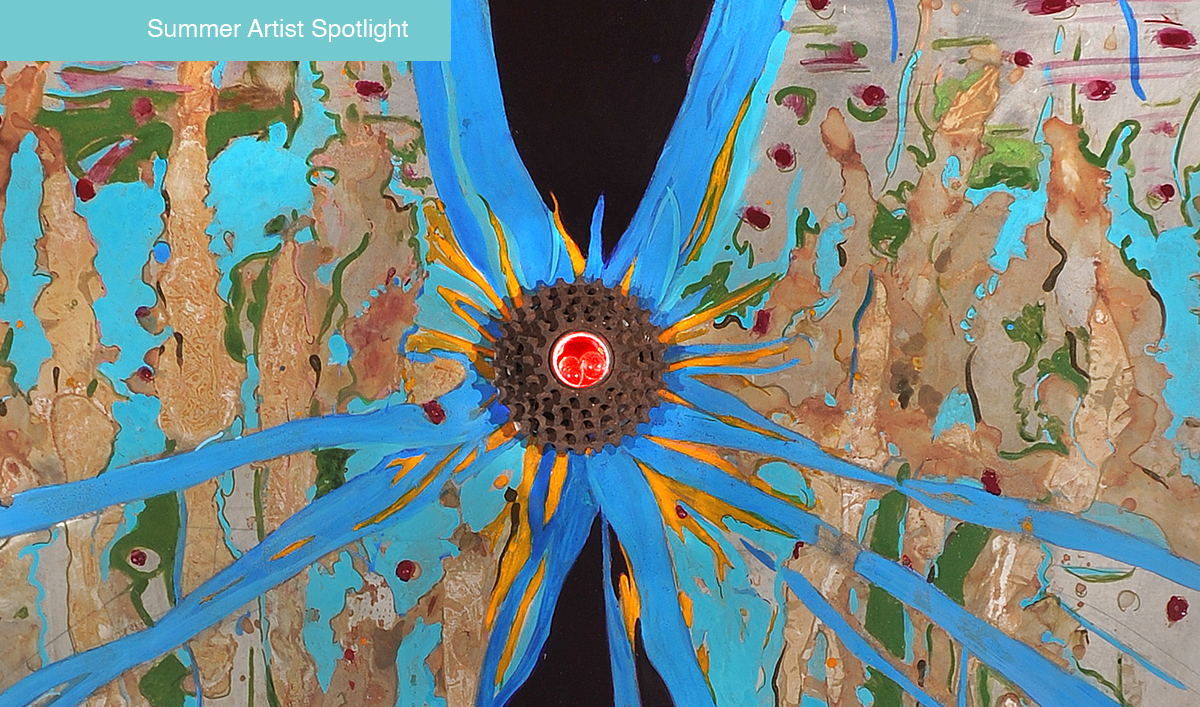
The first kimono piece centers around a dramatic vertical passage of black and electric blue that cuts through the garment like a surge of energy. The composition feels alive with movement, as though something internal is expanding outward from the center. Near the chest area sits a circular form that resembles a spiritual emblem or radiant source of light. Blue linear gestures travel across the surface like streams, veins, or pathways of thought. Surrounding these vibrant areas are corroded rust textures that introduce a rough, organic atmosphere to the work.
Throughout the piece, Hays creates a balance between decay and renewal. The rusted metal suggests the passage of time, weathering, erosion, and survival, while the luminous blue sections introduce a feeling of awakening and vitality. Rather than concealing the corrosion, Hays embraces it as part of the visual and emotional language of the artwork. The weathered surface becomes evidence of endurance and transformation. The kimono itself appears almost inhabited, carrying traces of memory and human presence while still radiating energy.
The symbolic role of the kimono is equally important. Traditionally connected to ceremony, identity, and cultural continuity, the garment here becomes less about function and more about spiritual presence. Without a visible body inside it, the form suggests absence while simultaneously implying human existence. It operates almost like a container for emotion, memory, or consciousness. Hays uses the kimono as a universal shape capable of holding shared human experiences rather than limiting it to a single cultural meaning.
The second kimono work develops this idea through a brighter and more luminous visual language. Golds, reds, greens, and blues move across the surface in flowing drips and layered textures that create a sense of rhythm and movement. At the center rests a sculptural flower-like form surrounded by illuminated horizontal lines that appear to vibrate across the garment. The addition of programmed LED lighting introduces a new sensory dimension, allowing light itself to become part of the artwork’s material structure.
The glowing bands of light shift the emotional atmosphere of the piece. As illumination interacts with the rusted metal and painted surface, the work changes depending on the surrounding environment and the viewer’s position. The artwork feels active and responsive rather than still. Through this combination of sculpture, painting, and light, Hays expands the experience of painting into something immersive and atmospheric.
Despite the complexity of materials and construction, both kimono works maintain a natural and intuitive quality. The flowing paint resembles rainfall, roots, rivers, or emotional release. The surfaces feel spontaneous and open, preserving the gestures and imperfections created during the process. This willingness to leave traces of experimentation visible gives the artworks a sense of immediacy and authenticity.
These rusted metal kimono pieces also reflect Hays’ continuing interest in consciousness and perception. Instead of presenting direct narratives, the works encourage quiet contemplation. Viewers are invited to spend time with the textures, colors, forms, and symbols as meanings gradually emerge. The kimono forms become meditative spaces where emotional and spiritual associations slowly unfold.
Through these recent works, Maridee Hays continues to explore art as a process of transformation and reflection. By combining rusted metal, paint, sculptural elements, and light within the symbolic structure of the kimono, she creates artworks that feel both timeless and contemporary. The pieces hold traces of ritual, healing, memory, and endurance while remaining deeply personal in their visual language. Hays reveals how even weathered materials can carry beauty, energy, and illumination.
