
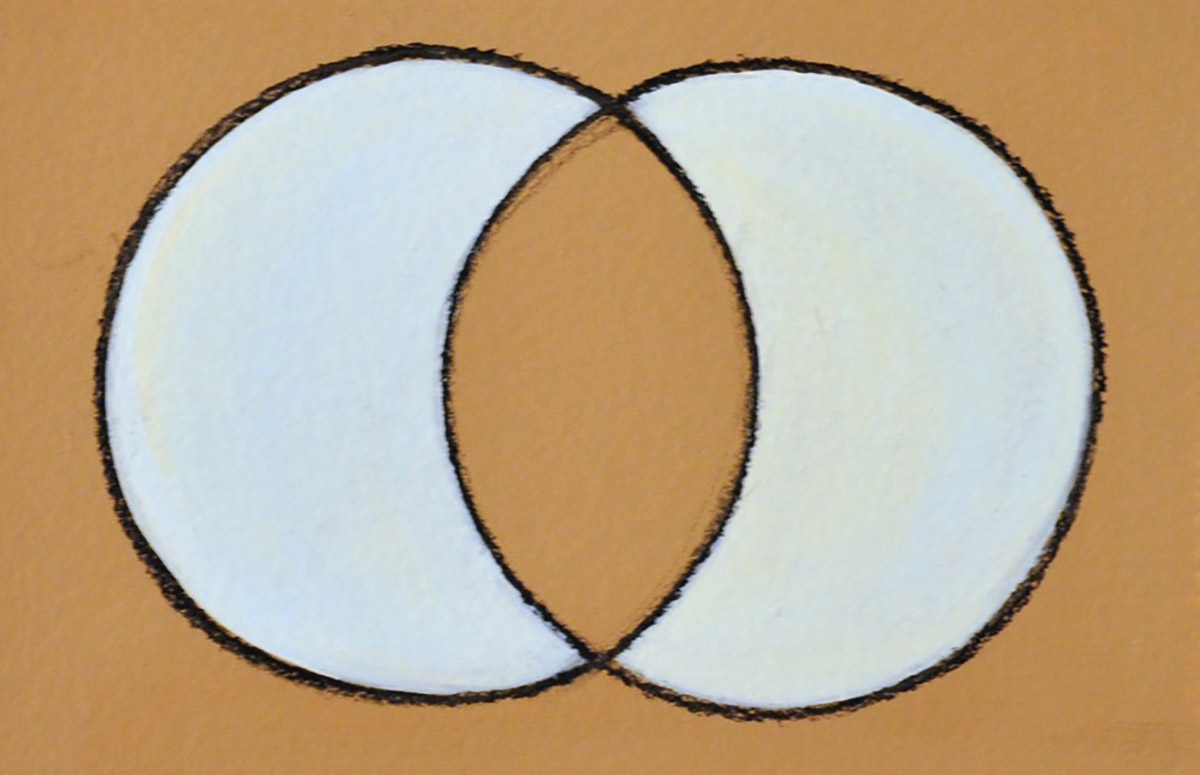
Garda Alexander is a German-born artist who lives and works in Switzerland. Her work does not chase spectacle or dramatic gestures. Instead, it moves quietly, grounded in a deep attentiveness to the natural world. Trained across multiple disciplines, Alexander works through painting, sculpture, spatial design, and land-based interventions. Yet regardless of medium, the core of her practice remains the same: exploring how color, space, and form connect human beings to life itself.
Her art carries a sense of stillness. Rather than presenting grand statements, it invites a slower kind of engagement. Surfaces, shapes, and environments are arranged in ways that encourage reflection rather than explanation. In Alexander’s view, the artist does not impose meaning onto the world but uncovers the patterns already present within it.
This approach gives her work a contemplative character. Whether she is creating a painting, shaping a sculptural form, or carving into stone within a landscape, the work becomes a place where viewers can pause and reconnect with something fundamental: the quiet energies that exist between nature, perception, and human experience.
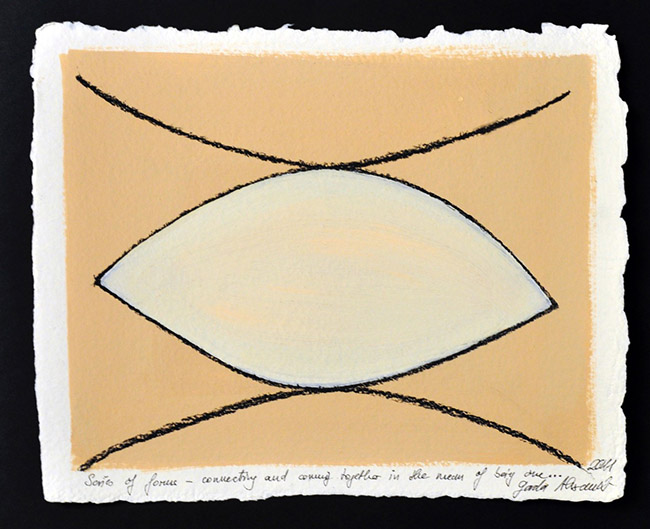
At the center of Garda Alexander’s artistic practice lies an idea that guides nearly everything she creates: nature already speaks through form. The artist’s role, in her words, is not to invent those forms but to recognize and reveal them.
“I try to read the energy language of nature that manifests itself in the forms we see,” Alexander explains. “I do not create them, I discover them. We have to learn to decode these forms in order to use them.”
This philosophy shifts the relationship between artist and environment. Instead of controlling materials or landscapes, Alexander works in dialogue with them. Natural structures, geological formations, and patterns found in plants or terrain become starting points for visual exploration. Through this process, art becomes less about representation and more about recognition.
Nature has long been more than a source of imagery for Alexander. Throughout her life, natural places served as spaces of refuge and recovery. Landscapes offered her quiet environments where she could process difficult personal experiences, including moments shaped by trauma, loss, and emotional upheaval.
These encounters with the natural world helped shape the direction of her work. As Alexander has explained, these places gave her the strength to move forward and make what she describes as “the choice for life.” In this sense, her art grows out of lived experience. The environments she creates are rooted in the same kind of restorative spaces that once supported her own healing.
This personal connection eventually expanded into a series of land-art projects that bring Alexander’s ideas directly into the landscape. Rather than working solely within studio walls, she began searching for outdoor locations that carried echoes of the places that once helped her rebuild resilience.
When Alexander began developing these projects, she chose sites carefully. Each location is selected for its archaeological, geological, or personal meaning. The places themselves often carry a sense of ancient presence. Remote terrain, dramatic rock formations, and historically layered landscapes provide the foundation for her interventions.
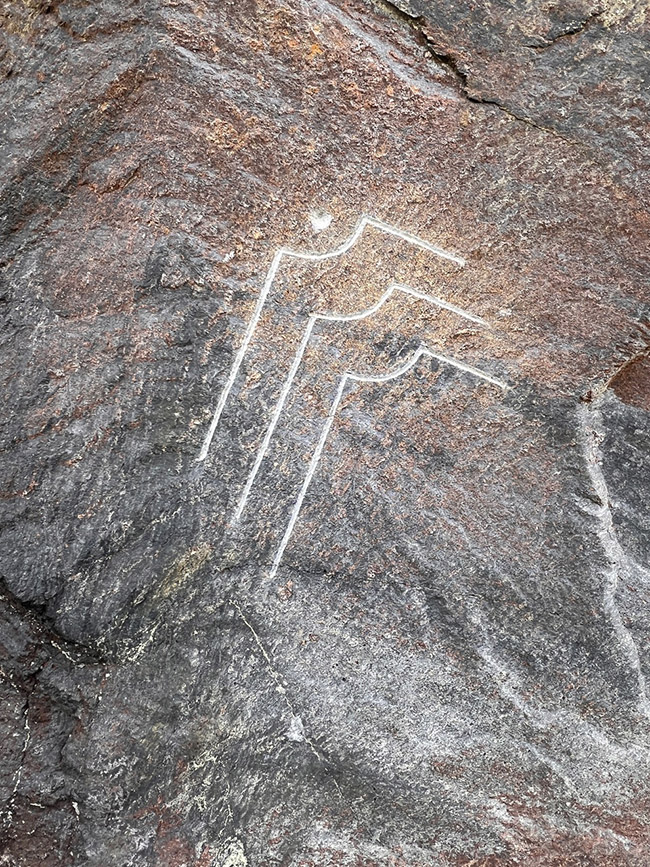
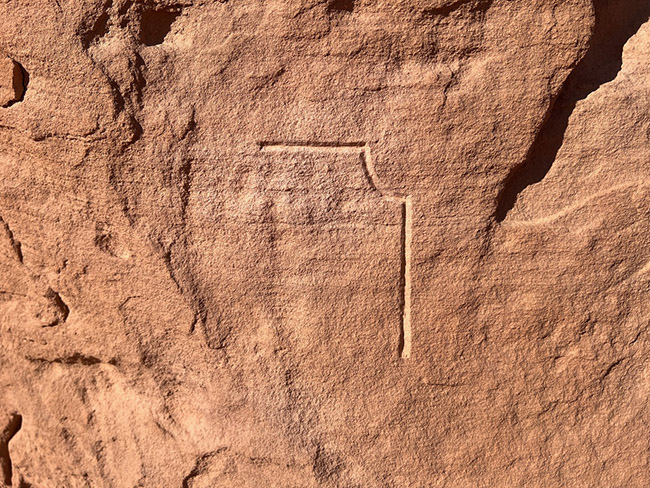
Within these environments, Alexander carves symbolic markings directly into large standing stones. The engravings are created using traditional hand tools rather than modern machinery, reinforcing a connection to ancient forms of human expression. The symbols themselves draw inspiration from research into cultural glyphs, archetypal signs, and early visual languages found across different civilizations.
The resulting sites feel suspended between past and present. Visitors encountering these engraved stones might feel as though they have discovered the remains of a forgotten prehistoric location. Yet these works are not replicas of ancient artifacts. They are contemporary gestures that acknowledge the deep continuity between human cultures and the landscapes they inhabit.
Alexander’s intention is not to provide clear explanations for the symbols carved into the stones. Instead, the sites function as open invitations. Viewers are encouraged to wander through the space, interpret the signs, and allow their imagination to form its own meanings.
For Alexander, the forms function like a code waiting to be interpreted. By bringing together symbols from different cultural histories, she hopes to awaken awareness of older layers of knowledge that remain embedded within human consciousness.
She describes these works as a way of reconnecting with both collective memory and inner awareness. The symbols act as reminders that human understanding has long been intertwined with natural forces, cycles, and energies.
To date, Alexander has realized three major land-art projects in Switzerland, Ireland, and Egypt. Each site highlights the specific character of its location while sharing the same underlying intention: encouraging respect for the environments in which the works appear.
One example is her project “Staziun da Forza” in Switzerland, where engraved stones create a space that encourages visitors to slow down, breathe, and reflect within the surrounding landscape. Rather than dominating the terrain, the carved forms become quiet markers within it.
Through these projects, Alexander hopes to draw attention to the fragility and value of natural spaces. The artworks remind viewers that landscapes are not simply scenic backdrops but living environments worthy of care and respect.
The influence of these outdoor projects also flows back into Alexander’s studio work. Her paintings, spatial concepts, and color studies all continue the same investigation into how environment, form, and perception interact.
In these works, color becomes a tool for shaping emotional atmosphere. Carefully balanced contrasts and spatial arrangements guide the viewer’s experience within the composition. Forms interact with surrounding space in ways that subtly influence perception, inviting viewers to become aware of how their environment affects their inner state.
Alexander sees visual language as something that operates on both conscious and unconscious levels. Color relationships, spatial rhythm, and structural balance can quietly shape the way a person feels within a space.
Ultimately, her practice suggests that artistic choices are never purely aesthetic. Color, form, and spatial relationships influence how people experience the world around them. By becoming more attentive to these elements, Alexander believes we can better understand both ourselves and the environments we inhabit.
Across paintings, sculptures, and landscapes, Garda Alexander’s work offers a simple but meaningful invitation: to pause, observe, and rediscover the subtle dialogue that exists between human perception and the living world.
