
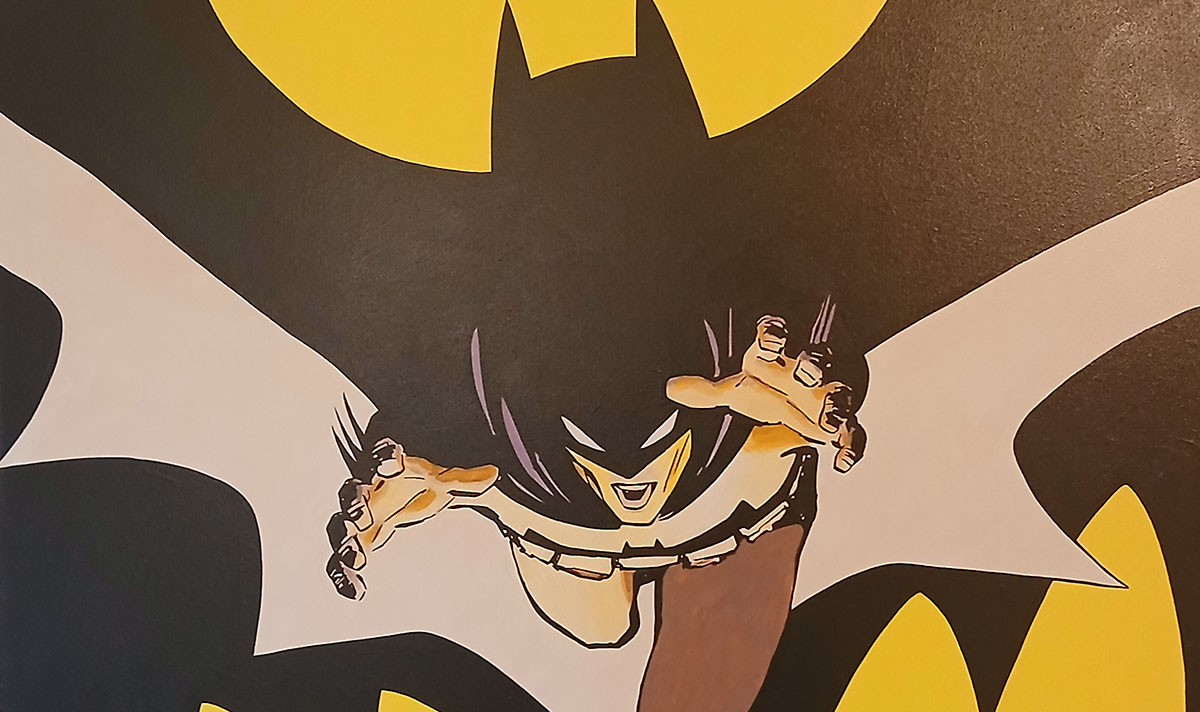
We received these works from Peter Parker. Whether that is his real name or a playful nod to comic book history, we will leave that open. It is hard not to smile at the coincidence. A name so closely tied to one of the most recognizable comic characters arrives attached to a group of paintings that look like they have stepped straight out of that world.
Peter Parker is not the artist behind these works. He takes on a different role, one that often stays out of view. He encourages, supports, and sponsors the artist who created them. It is a position that does not demand attention, yet it carries real weight. Without that kind of support, many works like these would never be made. In a space where most people want to be seen, he seems content to stand slightly aside and let the work speak first.
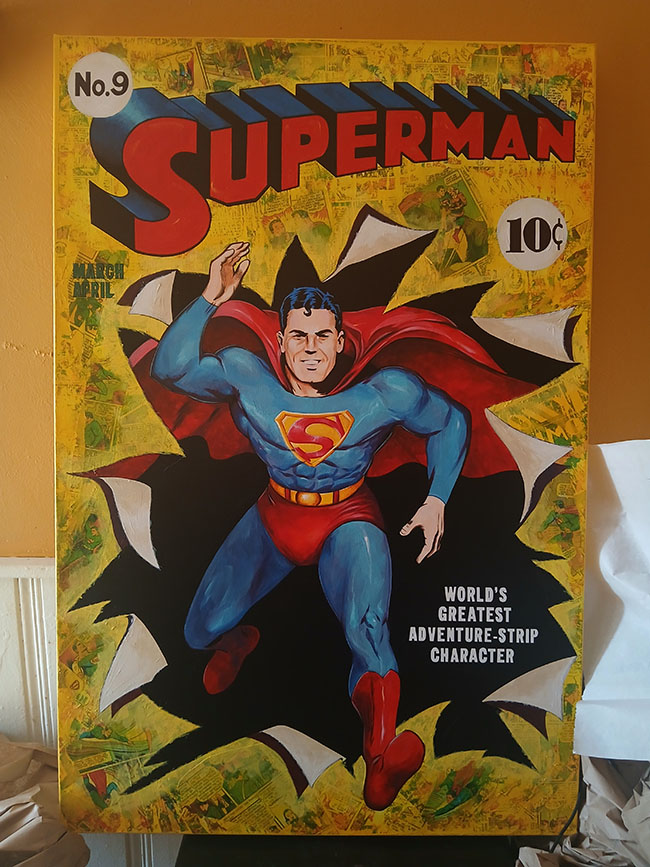
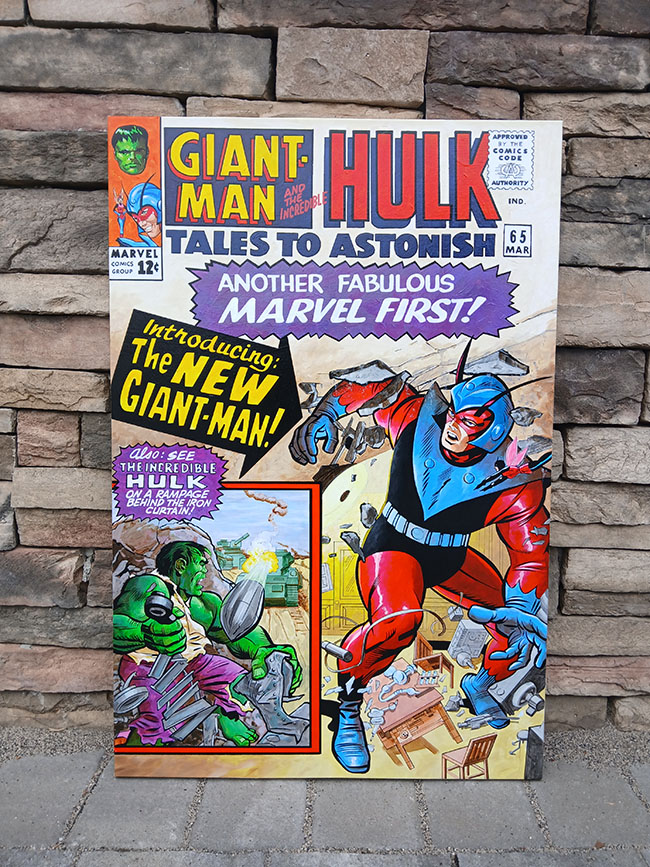
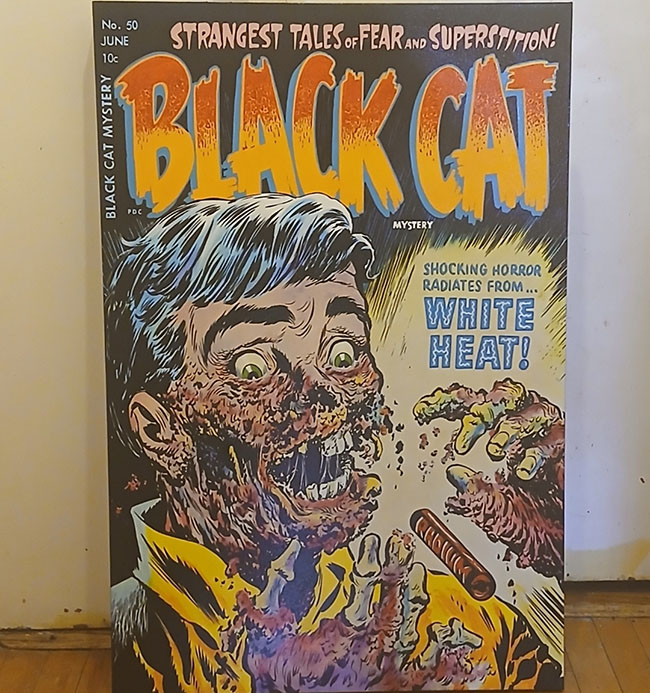
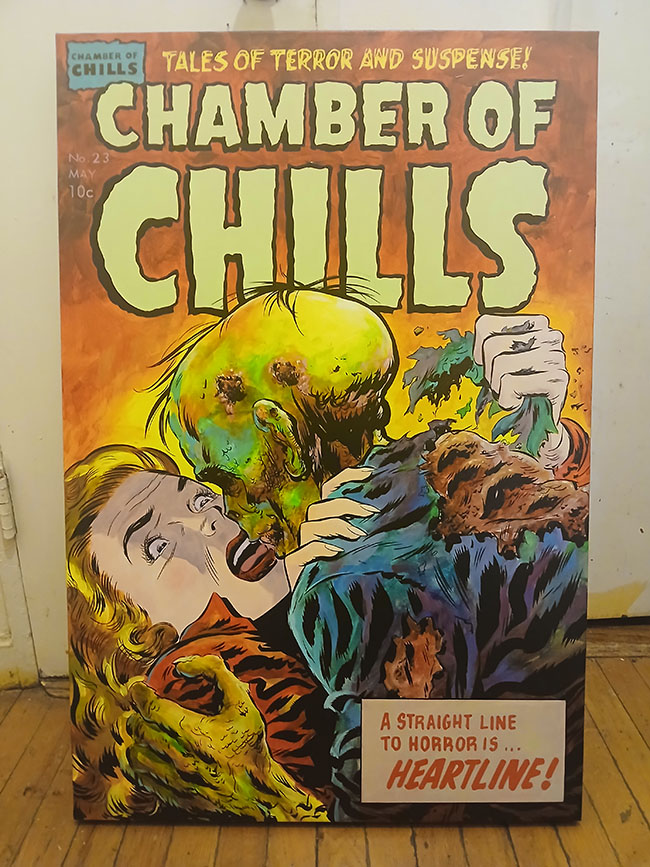
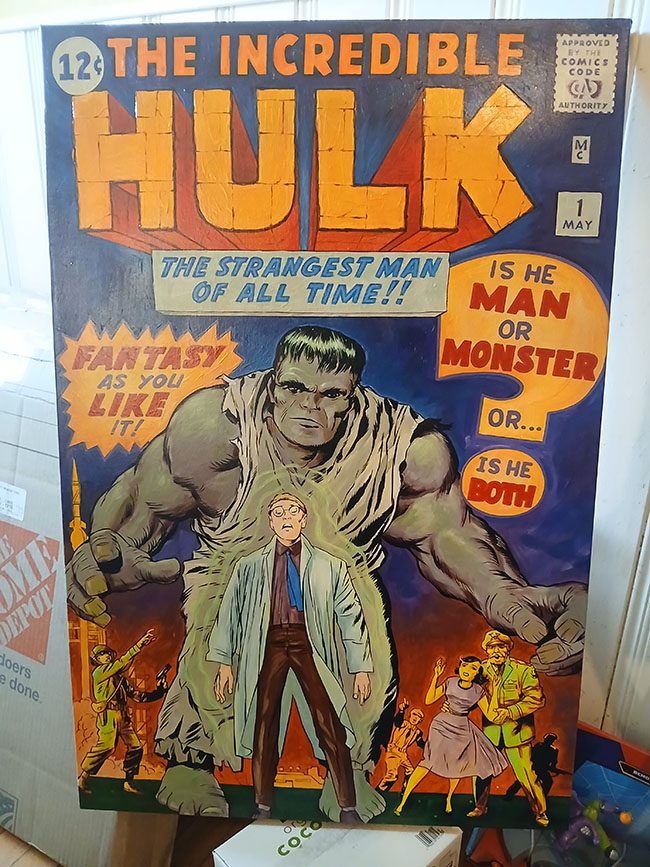
The paintings draw directly from the visual language of American comic books, shaped through the hand of artist Pete “PG” Garcia. They move across different eras, from the Golden Age to the Silver Age and into the Bronze Age. You can see it in the bold lettering, the dramatic poses, and the intense color choices. These elements were designed to grab attention quickly and tell a story in a single glance.
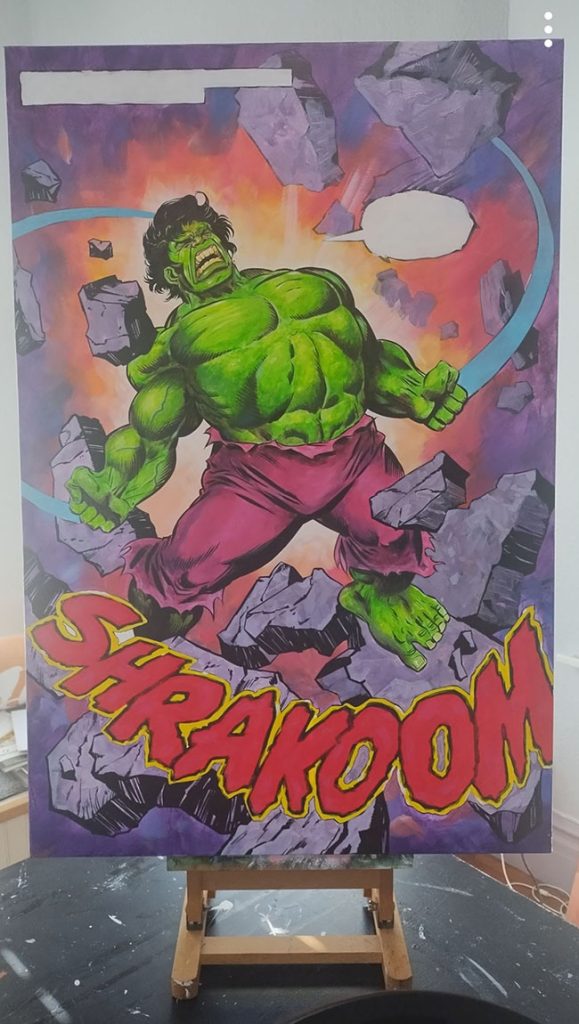
The Hulk appears in a familiar moment of tension, caught between human and something far less controlled. Batman shows up in more than one form. In one piece he stands with Robin in a classic composition, grounded and steady. In another, he is reduced to a striking silhouette against a glowing emblem, built almost entirely from shape and contrast. Superman breaks forward with confidence, pushing through the surface as if nothing can slow him down. Alongside these, there are darker images pulled from mid-century horror comics, where transformation is unsettling and often violent.
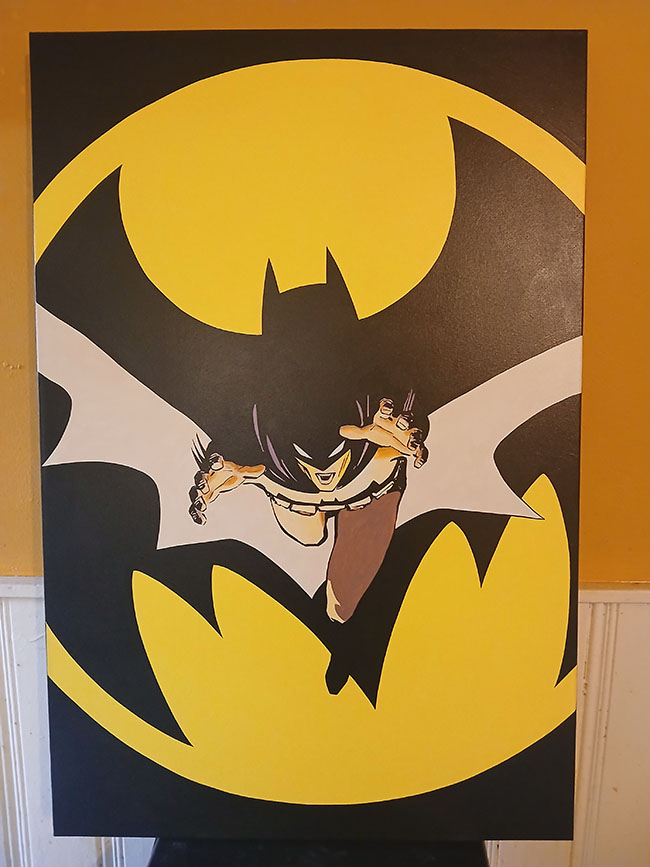
These works are not simple copies. They are careful reinterpretations. What was once printed on thin paper has been rebuilt in paint. The flat ink becomes layered texture. The mechanical precision of print gives way to the slight variations of the hand. The scale also changes the experience. These pieces are larger, more physical, and they ask the viewer to stand in front of them rather than hold them.
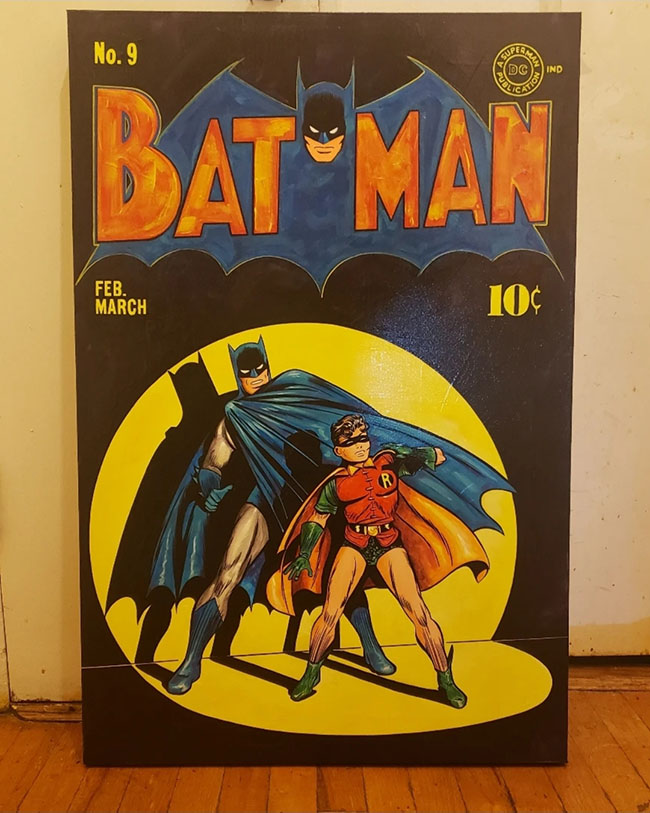
Peter Parker describes this project as a way to show appreciation and pay homage. That intention is clear. The works acknowledge the artists, writers, and creators who shaped American comic culture. Their contributions went beyond entertainment. They developed a visual and narrative language that reached a wide audience and helped define an era.
That influence continues to grow. What started as printed stories has expanded into film, television, and global pop culture. Characters from these early comics now exist in major cinematic franchises that reach millions of people. The scale has changed, but the core ideas remain. Identity, transformation, conflict, and responsibility continue to drive these stories.
By supporting this work, Parker is also supporting that ongoing influence. He is not only backing an artist but also recognizing the value of the source material. There is an understanding that these stories still matter, not just as something from the past, but as something that continues to shape the present.
There is also a personal aspect to this kind of support. Sponsorship requires trust. It involves stepping in without needing to control the outcome. Parker has chosen to invest in an artist who approaches this subject with care and respect. That relationship allows the work to develop without pressure to follow trends or immediate expectations.
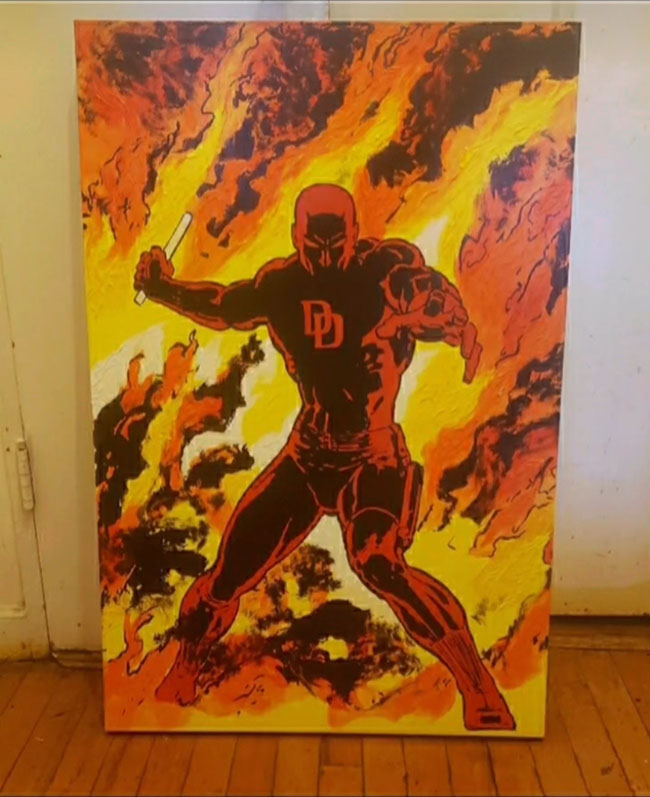
You can see that freedom in the paintings. The compositions are direct and confident. The colors are bold but controlled. Each piece communicates clearly while still leaving space for interpretation. The work respects its origins without being limited by them.
It would be easy to overlook someone in Parker’s position. His name is not attached to the brushwork, and his presence is not immediately visible in the final image. Yet art does not exist in isolation. Behind many works are people who make them possible through support and belief.
In this case, the name Peter Parker adds a light touch to the story. It brings a sense of familiarity and a bit of humor, whether intended or not. Real name or not, it fits.
