
Christopher Diont’e works across painting, sculpture, design, and craft with a practice grounded in lived experience rather than category. Based in the Hampton Roads area, his work moves between physical labor and conceptual thinking, often closing the distance between the two. He approaches art as something built as much as it is imagined. Oil, bronze, wood, and fabric are not separate paths, but part of one continuous language.
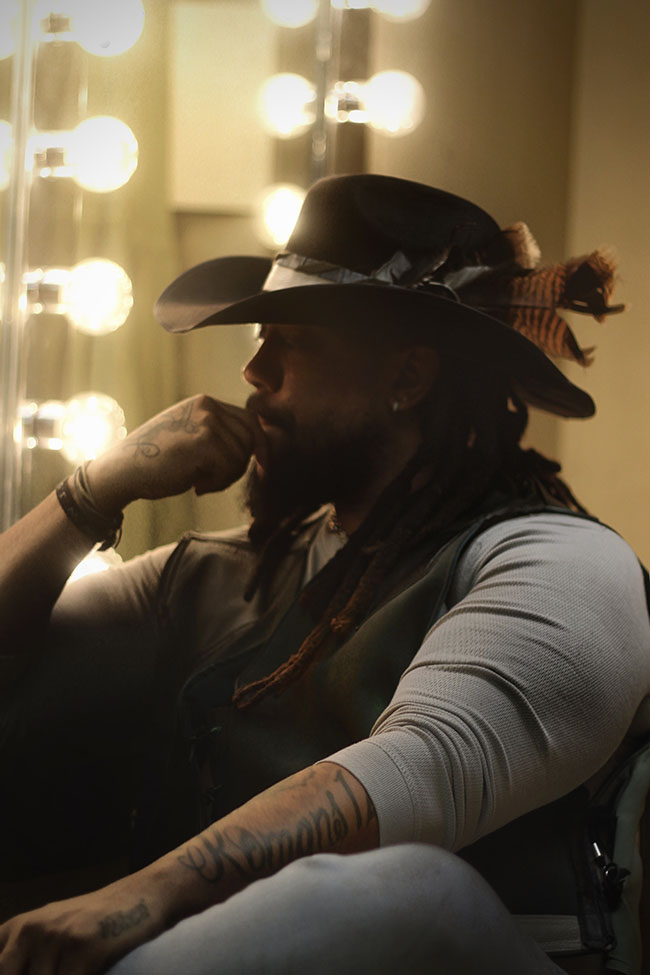
At the center of his work is a directness that does not hide process. Diont’e leans into transparency, showing how something is made and what it requires. His paintings carry weight through gesture and surface, while his sculptural work reflects time through material change. Across both, there is a focus on endurance—of the body, of memory, and of identity shaped through pressure.
This way of working extends into his fashion label, For Generations To Come. Rather than treating clothing as a finished product removed from its origins, he often constructs garments in public, hand-stitching them inside gallery spaces. The act itself becomes part of the work. It slows the pace and shifts attention back to labor—what it looks like, and what it means.
His background as a carpenter continues to anchor everything. Before recognition in the art world, he worked with his hands—building, measuring, repairing. That experience still shapes how he thinks. Structure matters. Foundation matters. As the first Artist-in-Residence at the Downing-Gross Cultural Arts Center, his role reflects both technical skill and a broader philosophy: the artist is responsible for creating the conditions in which the work can exist.
Outside the studio, his life expands into ranching in Suffolk, Virginia, where he identifies as an urban cowboy. This is tied to lineage rather than image. Through horsemanship and film, he documents the presence of Black cowboys, bringing attention to histories often left out of mainstream narratives. At the same time, fatherhood remains central. He speaks about it as a form of building—shaping a future, interrupting patterns, and creating stability where it did not exist before.
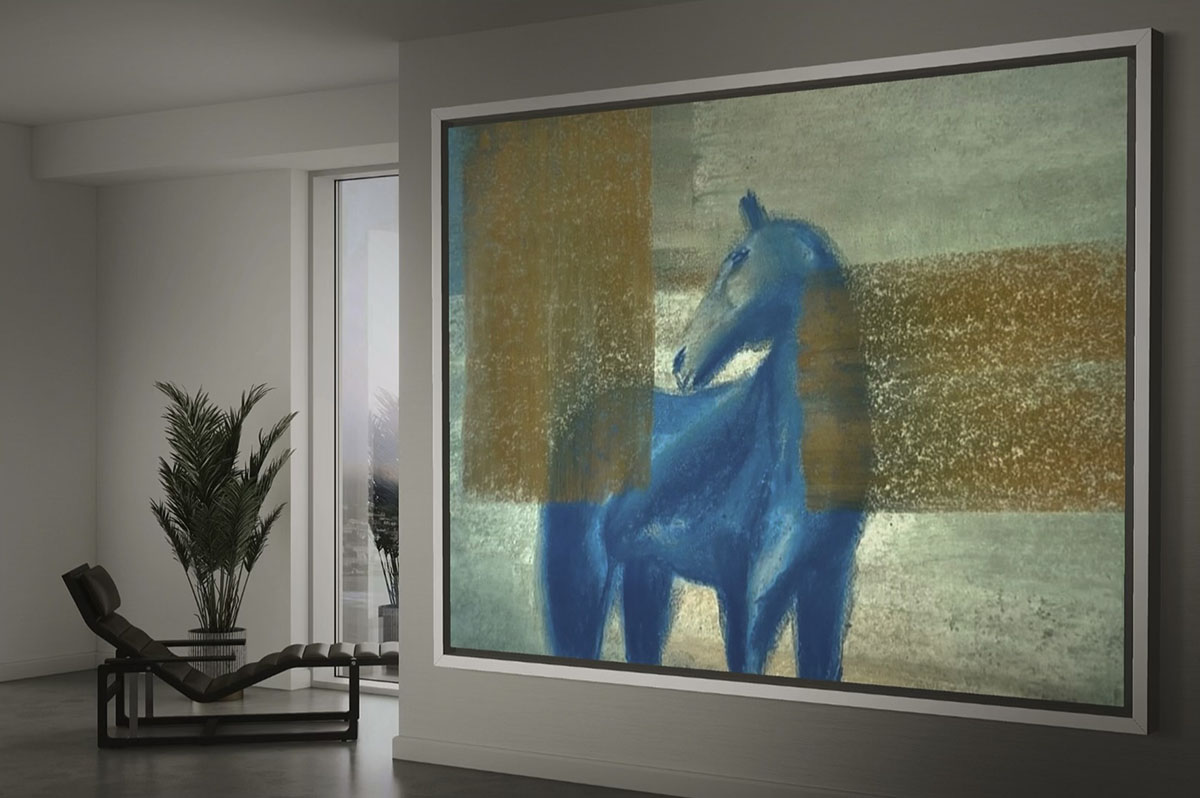
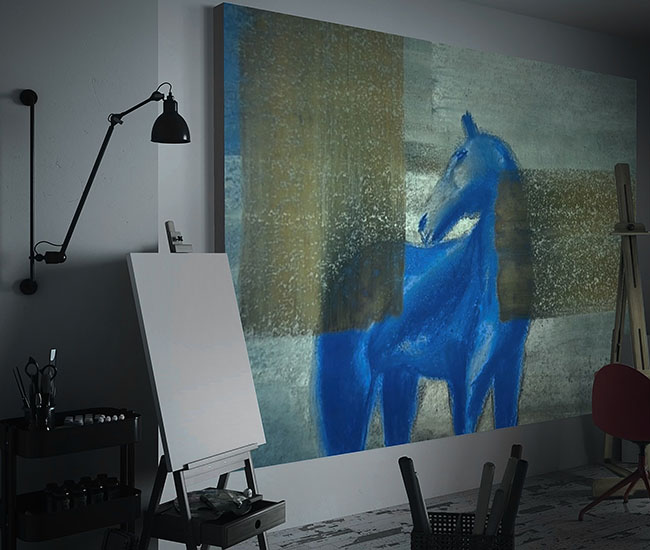
“Wild Blue” operates at a scale that changes how the viewer experiences space. The horse does not sit within a landscape—it merges with it. Layers of blue move across the surface, shifting between depth and light, creating an environment that feels both expansive and contained. The figure stands still. There is no urgency, no movement forward. The energy comes from restraint.
This is where Diont’e’s idea of “The Watchman” appears. Strength is not shown through motion, but through the ability to remain. The horse holds its position at the edge of something vast, without needing to cross it. The brushwork stays visible, allowing the surface to carry the history of its making. Paint builds and recedes, creating a rhythm that feels slow and deliberate.
The scale of the piece pulls the viewer into it. It creates a pause. The color draws you inward, but the figure keeps that movement grounded. The work does not tell a clear story. Instead, it holds a state of presence—steady, aware, and unmoving.
“Reconciliation” moves in a different direction. Where “Wild Blue” holds stillness, this work begins after disruption. Two horses emerge from conflict. The moment is not the fight itself, but what follows it.
There are traces of tension in their bodies. The ground feels unsettled. But the energy has shifted. Instead of pulling apart, the horses lean into each other. Their foreheads meet, forming a single shape. The gesture is quiet, but it carries weight.
Diont’e focuses on the physical act of coming back together. There is no dramatization. The reconciliation happens through contact—through the willingness to rest against another body after resistance. The composition reinforces this. The figures create an arch, replacing separation with connection.
The work does not erase what came before. It acknowledges it and moves through it. “Reconciliation” centers on the aftermath—the decision to repair. It suggests that what matters is not the absence of conflict, but the ability to return and hold steady again.
Across both works, Diont’e builds meaning through presence. Through material. Through the body. Whether standing alone or leaning into another, his figures carry a sense of responsibility. They hold their position. They remain.
