
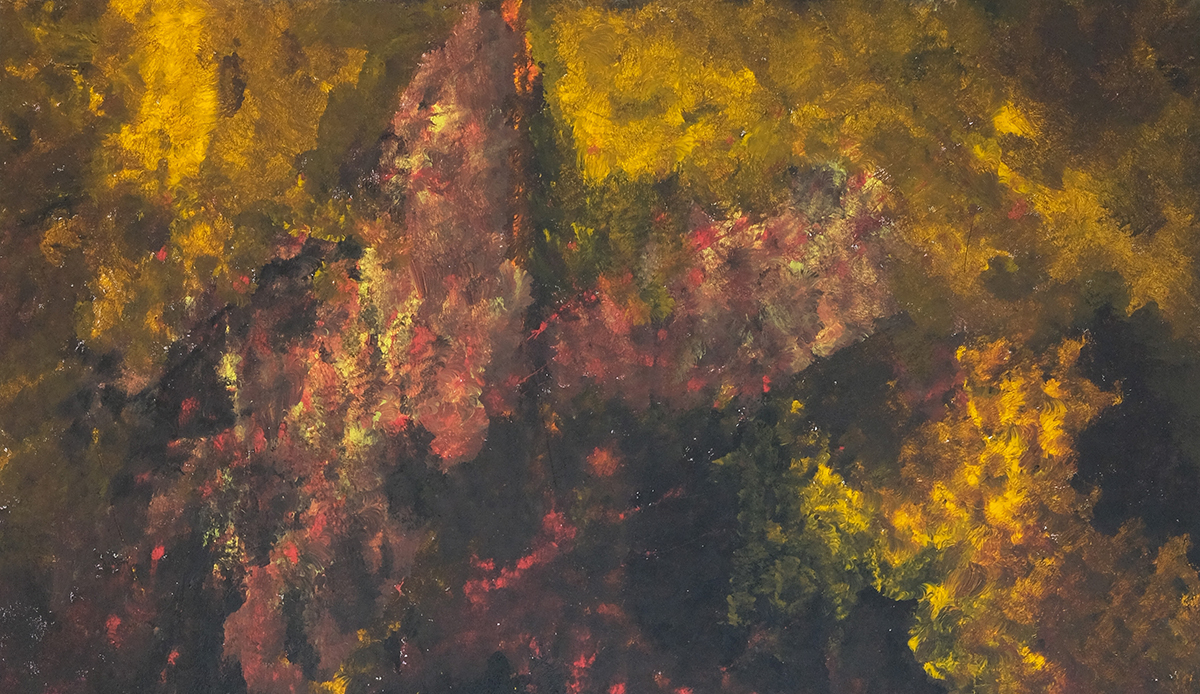
Der Poeck, an Austrian artist, creates paintings that invite viewers into a world of discovery, imagination, and quiet mystery. His artistic journey began in childhood, when he learned to draw from his mother and developed an early appreciation for visual expression. Color entered his life later, influenced in part by memories of his father, who spent time painting in oils during the 1990s. Although those artistic pursuits eventually gave way to work and family responsibilities, the paintings left a lasting impression. Years later, Der Poeck found himself drawn to painting and the possibilities of color, inspired by those early experiences. What began as curiosity gradually developed into a personal artistic path. Today, his work encourages close observation, inviting viewers to uncover hidden forms, subtle narratives, and unexpected discoveries within each composition.
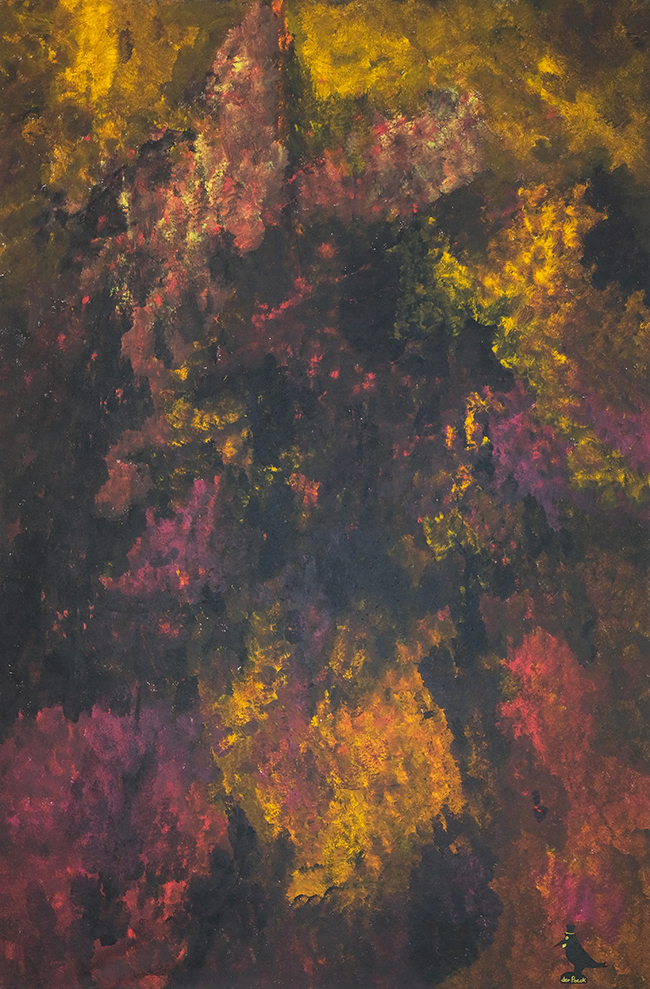
One of the most intriguing aspects of Der Poeck’s work is its relationship with mystery. Rather than presenting a clear narrative or an immediate answer, his images encourage viewers to pause, observe, and search. There is often a sense that something exists just beyond what can be easily seen, waiting patiently beneath the surface of the composition. This feeling of concealment becomes a central theme throughout his artistic practice.
Der Poeck is interested in the idea that not everything reveals itself at first glance. In everyday life, people often overlook details, moving quickly from one experience to the next. His paintings challenge that habit. They invite a slower way of looking, one that rewards patience and attention. The longer a viewer spends with the image, the more possibilities begin to emerge.
Within his compositions, hidden forms and subtle suggestions often occupy the spaces between certainty and imagination. Something appears to be present, yet its identity remains elusive. Is it a person, a memory, a creature, or simply a visual illusion created by the arrangement of shapes and colors? Der Poeck leaves these questions unanswered. Instead of directing interpretation, he allows viewers to participate in the discovery process themselves.
This openness creates a unique relationship between artwork and observer. Every individual may encounter something different within the same image. One person might recognize a familiar presence, while another notices a completely different story unfolding. These varied responses become part of the artwork’s life. The painting continues to change through the perspectives brought to it by those who spend time with it.
There is also a sense of anticipation within Der Poeck’s work. His paintings suggest that something is about to happen or that a hidden presence may eventually reveal itself. This expectation creates tension, but it is not an uncomfortable tension. Instead, it resembles the feeling of standing in a quiet place and sensing that there is more to discover than what is immediately visible.
Shadows often play an important role in supporting this atmosphere. Rather than functioning merely as visual elements, they become spaces of possibility. The shadowed areas of the image hold unanswered questions and concealed forms. They act as thresholds between the known and the unknown, encouraging viewers to look beyond what is obvious.
What makes these works particularly engaging is that Der Poeck does not attempt to explain their mysteries. He acknowledges that the attraction people feel toward these images cannot always be defined through language. Some experiences are visual and emotional rather than intellectual. The appeal lies not in finding a correct interpretation but in remaining open to what the image might reveal.
This approach reflects a broader understanding of art as an encounter rather than a statement. Instead of delivering a fixed message, Der Poeck creates opportunities for discovery. His paintings become spaces where curiosity can flourish. Viewers are invited to bring their own memories, experiences, and imagination into the work.
There is a quiet magic present in these images. Something remains concealed among the shadows, waiting to be noticed. It may be a new encounter or perhaps something that has always existed within the composition, hidden in plain sight. The process of uncovering these elements cannot be rushed. The image gradually reveals itself through observation, rewarding those willing to spend time with it.
The hidden presence that appears throughout his paintings may never fully reveal itself. Yet that uncertainty is precisely what gives the work its lasting appeal. The image continues to hold questions long after the first viewing. Each return offers the possibility of noticing something new or seeing familiar elements from a different perspective.
Through this balance of mystery, suggestion, and careful observation, Der Poeck creates artworks that resist quick conclusions. His paintings reward those willing to look closely and spend time with them. Behind the shadows, within the layers of color and form, something waits to be discovered. Whether it is a new encounter or something that has always been there, the experience of searching becomes as meaningful as the discovery itself.
