
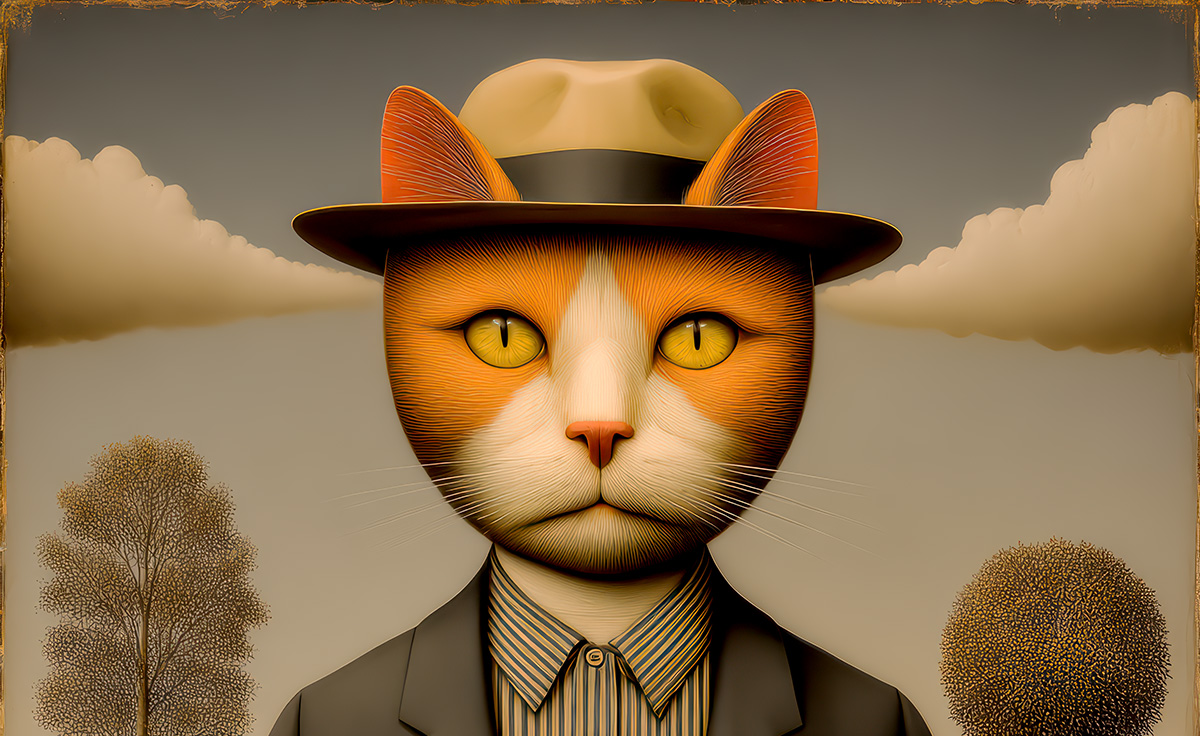
Alan Brown first encountered photography in a studio darkroom, watching an image emerge as film was developed. The experience began a lasting interest in photography and visual art that has shaped more than 40 years of creative work. He went on to study at Syracuse University, earning a BS in Communications with a major in Advertising Photography and a minor in Art History. Those studies brought together the practical demands of making an image and the long history of how images communicate. In A Portrait with a Pear, Brown draws on the familiar language of formal portraiture and gives it an unexpected subject: a cat dressed in a suit and hat. The portrait’s humor comes from the care with which its subject is presented. Brown treats the cat’s pose seriously, allowing viewers to notice both the dignity of the portrait and the small absurdity at its center.
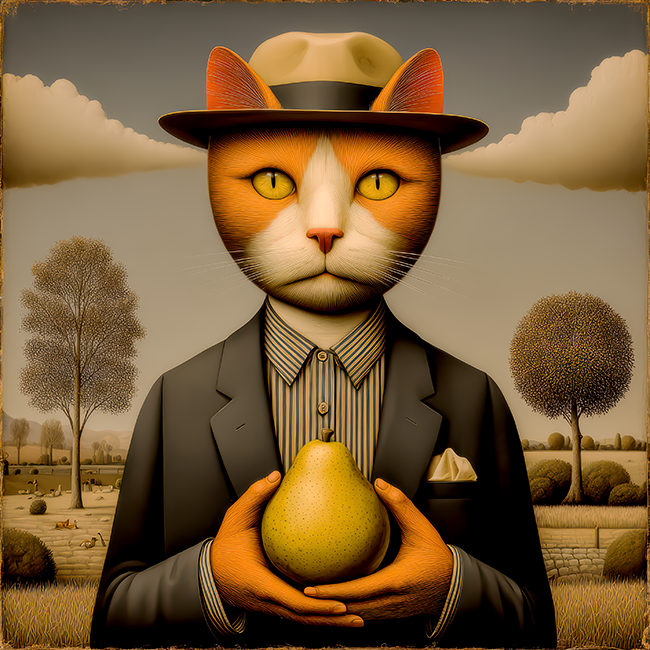
A single pear rests in the cat’s grasp. It is a modest object, but its placement gives it the importance of an emblem. In older portraits, a sitter might hold something meant to tell us about their position, interests, or identity. Here, the pear seems to invite the same kind of reading without offering a firm answer. Is it a treasured possession, a symbol of refinement, or simply a pear? Brown leaves that question open.
The suit and hat also shape the way we meet the subject. They suggest someone who has prepared to be seen and expects the occasion to be taken seriously. Yet the face beneath the hat belongs to a housecat. Viewers can understand the pose immediately while recognizing that its usual social cues have been rearranged. Brown does not need to exaggerate the joke. The picture’s composure lets the unlikely combination do the work.
That restraint makes the portrait more interesting than a quick visual gag. If the cat were presented only as a comic figure, the pear and clothing would have little to do beyond making us smile. Instead, the portrait asks us to spend time with the conventions it borrows. Why does formal dress make a subject appear important? Why does an object held for the camera seem to carry meaning? How much of a sitter’s dignity comes from the sitter, and how much comes from the portrait itself?
Brown’s background in advertising photography is relevant to these questions. An image can guide a viewer’s first impression through the choices made about its subject and presentation. In this work, familiar details lead us toward the expectation of a distinguished portrait. The cat then complicates that expectation. We may smile, but we also notice how readily we accepted the visual signals of status in the first place.
His study of art history provides another way into the picture. Formal portraits have long used clothing, posture, and possessions to tell viewers how a person wished to be seen. Brown brings that tradition into an everyday domestic setting. A household companion occupies a role once reserved for people posing to mark their standing or achievements. The result feels affectionate as well as playful: the cat is given the attention usually devoted to an important sitter.
The pear is central to that effect. Held alone, it becomes impossible to overlook. Viewers may search it for a hidden message because the portrait presents it as though it should have one. Brown allows that search to remain part of the experience. The object can seem ceremonial one moment and delightfully ordinary the next, depending on what the viewer brings to it.
There is tenderness in giving an animal this kind of presence. People often know their pets through habits and expressions that outsiders may never see. A formal portrait can offer a way of acknowledging that attachment. Brown’s image does so while leaving room for a wider joke about our own customs. We dress for portraits, hold objects chosen to represent us, and hope the resulting picture will convey something lasting. The cat follows the same rules with a pear in its paws.
Brown keeps the portrait’s tone steady. The subject appears to take its place in the picture without embarrassment, and that apparent confidence gives viewers permission to respond in more than one way. We can enjoy the humor, admire the care in the presentation, or think about why certain images command respect. None of those responses cancels the others.
What stays with the viewer is the balance between the familiar and the unexpected. A cat in human clothes could be a simple novelty. Brown gives the scene the poise of a formal sitting, then lets one piece of fruit carry more weight than anyone can quite explain. The portrait honors its subject, gently questions the rituals of portraiture, and leaves the final interpretation with us.
