
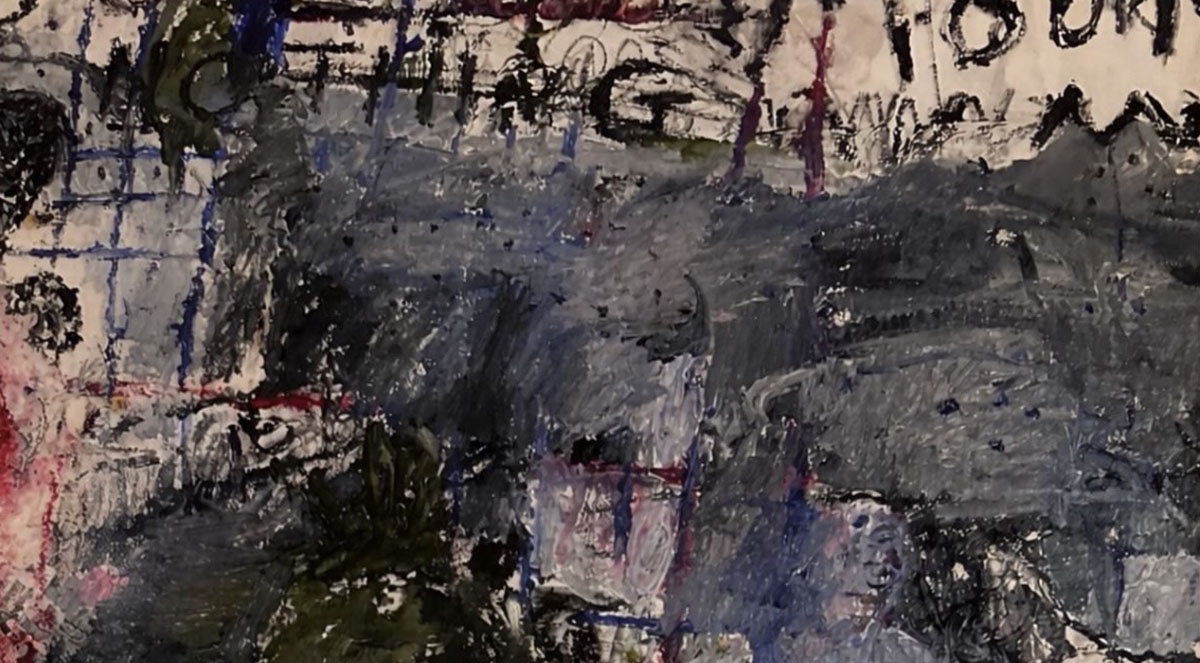
Kat Holmes works through painting as a way of staying close to lived experience rather than stepping back from it. A BA Fine Art graduate from the University of the West of England, she has maintained a consistent, hands-on relationship with her practice since her early twenties. Based in the North West of England, she is also a studio resident at Document in Bristol. Her work develops through repetition and revision, returning to a set of recurring concerns—love, loss, absence, and the instability of memory. These are not treated as fixed subjects but as shifting conditions. Holmes moves between instinct and control, allowing emotion to guide the process while introducing a more structured approach to how each painting is built. The result is work that feels closely held, reworked over time, and intentionally left open rather than fully resolved.
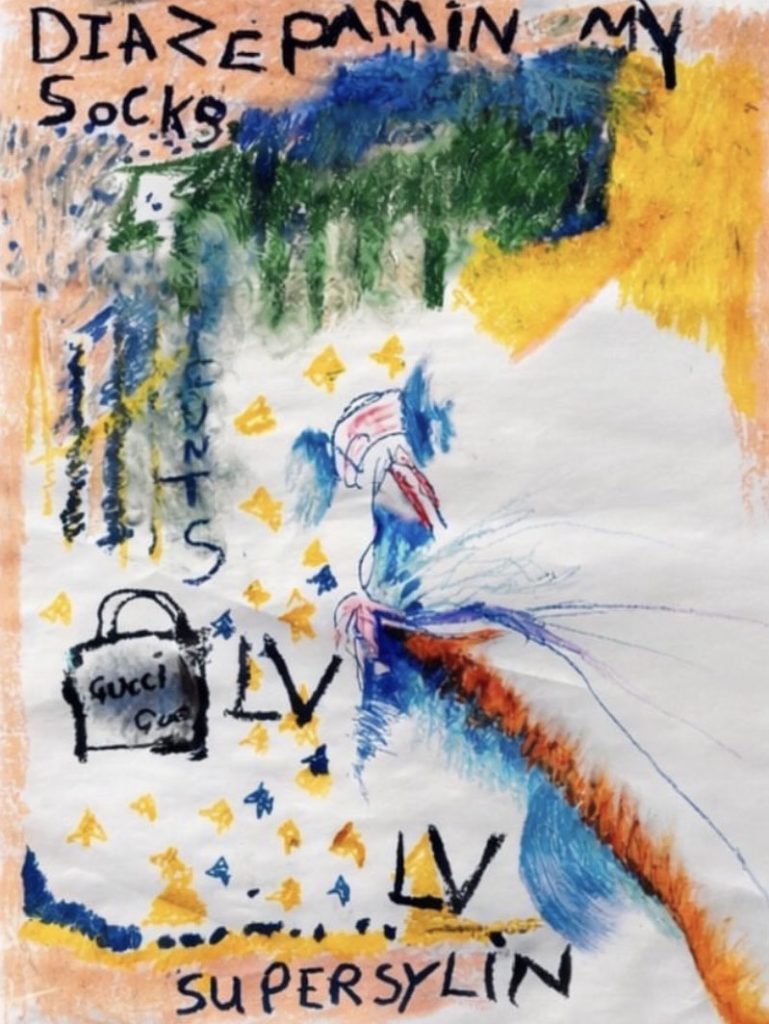
Holmes’ paintings begin from a place that is both personal and unstable. Rather than documenting specific events, she draws from emotional residue—what remains after something has already happened. This distance matters. It allows her to approach memory not as a clear narrative but as something fractured, layered, and often unreliable. In her work, figures and forms tend to hover between presence and disappearance, never fully settling into clarity. Edges blur, surfaces shift, and color carries as much weight as subject.
There is a sense that each painting is not trying to explain anything directly. Instead, it circles around a feeling, returning to it again and again from different angles. This repetition is not about refinement in the traditional sense. It is about staying with something long enough for it to change. Holmes treats memory as something that moves, and her paintings follow that movement rather than trying to fix it in place.
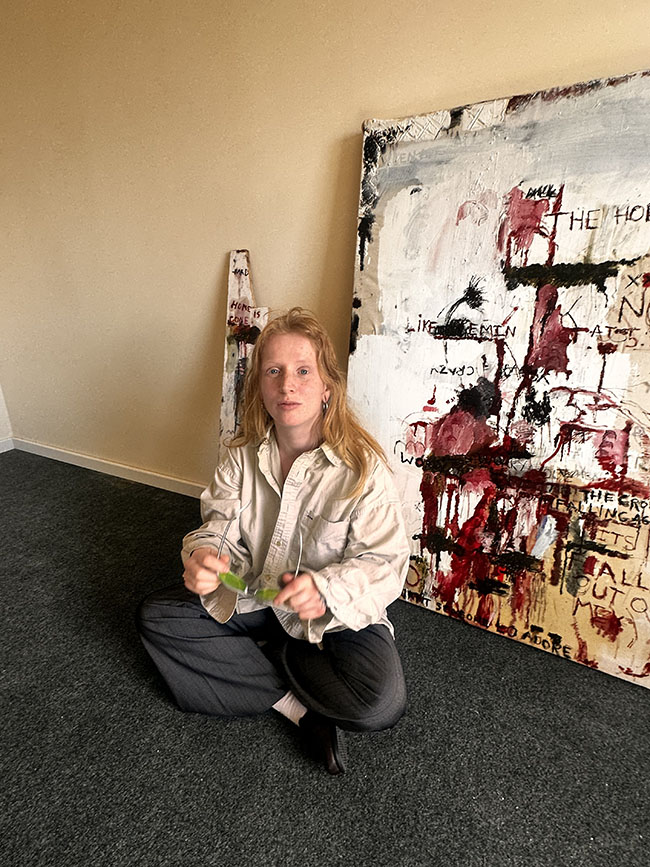
Her process reflects this approach. While earlier work leaned heavily on intuition, more recent paintings introduce a clearer structure. Holmes has described this shift as similar to working through a mathematical equation. The comparison is useful, but not in a literal sense. It speaks more to the way she now builds a painting in stages, making decisions, testing relationships, and adjusting elements until something holds together.
This does not remove the emotional core of the work. If anything, it gives it a stronger framework. The balance between instinct and method allows her to push a painting further without losing its original impulse. Each layer becomes part of a negotiation—between what is felt and what is constructed.
Reworking plays a central role here. Holmes does not treat a painting as finished until it has been pushed, altered, and returned to multiple times. Surfaces are built up and broken down. Marks are covered, reintroduced, or left partially visible. This creates a sense of time within the work itself. You can see where decisions have been made and then reconsidered. The painting holds its own history.
This approach also reinforces the personal connection she maintains with each piece. Rather than producing work at a distance, Holmes stays closely involved with the painting throughout its development. There is a reluctance to let go too early. Completion is not about reaching a polished endpoint but about arriving at a moment where the work feels resolved enough to stand on its own.
Her first solo exhibition, Coming Home, marked an important step in bringing this process into a public setting. The title itself suggests a return, but not necessarily to a fixed place. Instead, it points to the act of revisiting—of moving back through memory and experience to see what remains. The works in the exhibition carried this sense of movement, each painting acting as a point within a larger cycle rather than a final statement.
Holmes’ work has been supported and highlighted by platforms such as Women in Art, Flux Review, and Paint Britain. These features place her within a wider network of artists who are similarly engaged with process-driven practices. At the same time, her work remains distinct in how closely it stays tied to personal experience without becoming overly descriptive.
Upcoming features in Artist Talk Magazine and Metachrosis Literary Magazine suggest a growing interest in her approach. These publications tend to focus on artists who are working through ideas rather than presenting fixed conclusions, which aligns with Holmes’ way of making.
Her second solo exhibition, scheduled to take place at SHOP in Preston, continues this trajectory. While details of the new work are still emerging, it is likely to extend the same concerns—memory, identity, and the tension between control and instinct—into a new set of paintings. The shift from one exhibition to the next is not about reinvention. It is about continuation, with each body of work building on what came before.
Holmes’ practice resists quick interpretation. It does not offer clear narratives or fixed meanings. Instead, it asks for time—both in the making and in the viewing. The paintings hold space for uncertainty, allowing emotions to remain unresolved. This is where their strength sits. Not in delivering answers, but in staying with the question long enough for it to change.
